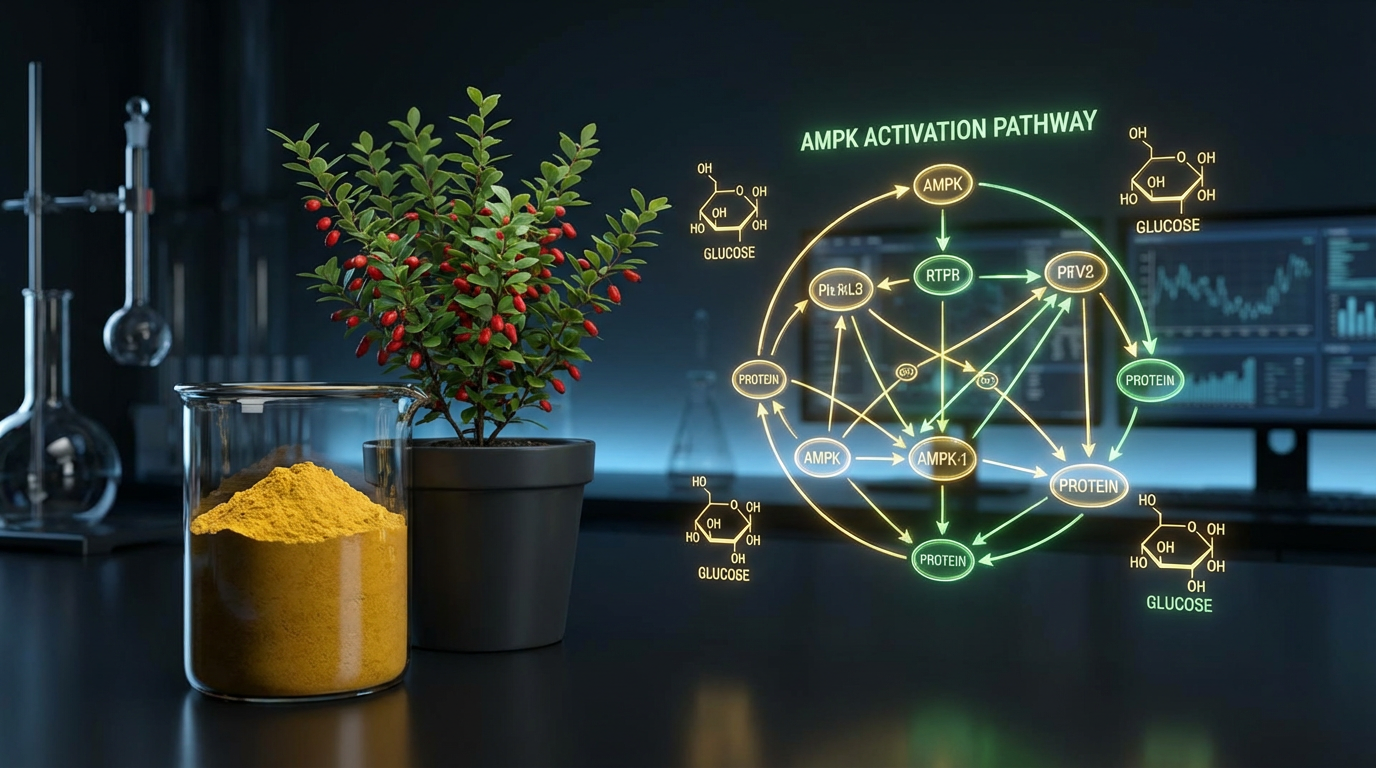
Berberine has quietly become one of the most talked-about supplements in longevity and metabolic health circles — and for good reason. This bright yellow plant compound, extracted from herbs like barberry and goldenseal, activates the same cellular pathway as the diabetes drug metformin, leading many researchers to call it “nature’s metformin.”
But berberine’s appeal goes well beyond blood sugar control. Emerging research suggests it may slow aging at the cellular level, support gut health, reduce inflammation, and even extend lifespan in animal models. If you’re building a longevity supplement stack, berberine deserves serious consideration.
What Is Berberine?
Berberine is an alkaloid compound found naturally in several plants, including:
- Berberis vulgaris (barberry)
- Berberis aristata (tree turmeric)
- Hydrastis canadensis (goldenseal)
- Coptis chinensis (goldthread)
It has been used in traditional Chinese and Ayurvedic medicine for thousands of years, primarily to treat infections and digestive disorders. Modern science has validated many of these uses while uncovering entirely new mechanisms that make berberine relevant to longevity research.
Its most important action is activating AMP-activated protein kinase (AMPK) — sometimes called the “metabolic master switch.” This is the same enzyme activated by exercise, caloric restriction, and metformin. When AMPK is switched on, it shifts cells into a repair-and-conserve mode that has wide-ranging benefits for aging.
Berberine vs. Metformin: How Similar Are They?
The comparison to metformin is one of the most searched questions about berberine, and it holds up surprisingly well under scrutiny.
A landmark 2008 study published in Metabolism compared berberine directly to metformin in people with type 2 diabetes. After three months, both groups saw similar reductions in fasting blood glucose, post-meal blood glucose, and HbA1c levels. The berberine group also saw a significant reduction in triglycerides and LDL cholesterol — areas where metformin is less effective.
Both compounds work primarily by:
- Activating AMPK in liver and muscle cells
- Improving insulin sensitivity
- Reducing glucose production in the liver (gluconeogenesis)
- Slowing glucose absorption in the gut
Key differences:
- Berberine is available without a prescription
- Berberine has additional antimicrobial and gut microbiome effects
- Metformin has more long-term safety data in humans
- Berberine has lower bioavailability and requires strategic dosing
Metformin is sometimes studied as a longevity drug itself (the TAME trial). The fact that berberine activates overlapping pathways makes it an intriguing natural alternative — though it should not replace metformin for people with diabetes without medical guidance.
Berberine’s Key Mechanisms for Longevity
1. AMPK Activation
AMPK activation is at the heart of berberine’s longevity effects. When AMPK is active, cells:
- Increase mitochondrial biogenesis
- Activate autophagy (cellular cleanup)
- Suppress mTOR, the growth pathway associated with accelerated aging
- Reduce fat storage and improve energy efficiency
These are the same cellular changes triggered by caloric restriction — the most consistently proven intervention to extend lifespan across virtually every species tested.
2. Autophagy Induction
By suppressing mTOR through AMPK, berberine triggers autophagy — the process by which cells break down and recycle damaged components. Impaired autophagy is a hallmark of aging and age-related diseases including Alzheimer’s, Parkinson’s, and cancer. You can read more about how to activate this process in our article on how to activate mitophagy for cellular health.
A 2020 study in Aging Cell found that berberine extended the lifespan of C. elegans worms and Drosophila flies, with autophagy playing a central role. This adds berberine to a short list of compounds with direct lifespan extension evidence in multiple organisms.
3. Gut Microbiome Modulation
Berberine has potent effects on the gut microbiome — the community of bacteria that live in your digestive tract and influence everything from immunity to mood to metabolic health.
Research shows berberine:
- Increases populations of beneficial bacteria like Akkermansia muciniphila, which is associated with leanness and metabolic health
- Reduces harmful gram-negative bacteria
- Strengthens the intestinal barrier (reduced gut permeability)
Interestingly, the gut microbiome may be key to berberine’s bioavailability paradox. Despite poor absorption from the gut into the bloodstream, berberine produces significant systemic effects — researchers believe this is partly because gut bacteria transform berberine into more bioavailable metabolites.
4. Inflammation Reduction
Chronic low-grade inflammation (sometimes called “inflammaging”) is a primary driver of aging. Berberine inhibits several inflammatory pathways, including NF-kB — a master regulator of the inflammatory response.
Multiple clinical trials have documented reductions in inflammatory markers including C-reactive protein (CRP), interleukin-6 (IL-6), and tumor necrosis factor-alpha (TNF-alpha) following berberine supplementation.
5. Lipid and Cardiovascular Benefits
Berberine consistently improves lipid profiles in clinical trials:
- Reduces total cholesterol by 15–20%
- Lowers LDL cholesterol by 20–25%
- Reduces triglycerides by 30–35%
- May modestly increase HDL
These effects rival some statin drugs. The mechanism differs from statins — berberine upregulates LDL receptors in the liver and reduces cholesterol synthesis through a separate pathway, making it potentially complementary to statin therapy in some people.
What the Research Shows
Blood Sugar Control
A 2015 meta-analysis in Evidence-Based Complementary and Alternative Medicine analyzed 14 randomized controlled trials involving 1,068 participants. Berberine significantly lowered fasting blood glucose, 2-hour postprandial blood glucose, and HbA1c compared to placebo. Its effects were comparable to standard diabetes medications.
Weight Management
A 2012 pilot study in Phytomedicine found that obese participants taking 500 mg of berberine three times daily for 12 weeks lost an average of 5 pounds and saw significant reductions in waist circumference, with no dietary changes required. AMPK activation in fat cells promotes fat burning and inhibits fat storage.
Non-Alcoholic Fatty Liver Disease (NAFLD)
Multiple clinical trials show berberine reduces liver fat accumulation, liver enzymes (ALT and AST), and liver inflammation in people with NAFLD — a condition affecting up to 25% of adults worldwide and closely linked to metabolic aging.
Cognitive Health
Emerging evidence suggests berberine may protect brain cells. It crosses the blood-brain barrier and has shown neuroprotective effects in cell and animal studies, including reducing amyloid-beta accumulation, a hallmark of Alzheimer’s disease. Human trials are ongoing.
Berberine Dosage: How Much to Take
Standard dose: 500 mg, taken 2–3 times per day with meals
Total daily dose: 1,000–1,500 mg
Splitting the dose is important because berberine has a relatively short half-life and causes a drop in blood sugar shortly after ingestion. Taking it with meals helps moderate this effect and improves tolerability.
Timing recommendation:
- 500 mg with breakfast
- 500 mg with lunch or dinner
- Optional: 500 mg with the third meal
For beginners, starting at 500 mg once daily for 1–2 weeks before increasing the dose helps reduce initial digestive side effects.
Cycling Protocol
Some practitioners recommend cycling berberine — taking it for 8–12 weeks, then taking a 4-week break — because continuous use may reduce gut bacteria diversity over time. This mirrors how some longevity researchers think about other AMPK activators.
Berberine Side Effects and Safety
Berberine has a good safety record, but there are important considerations:
Common side effects (especially when starting):
- Digestive upset, nausea, or diarrhea
- Constipation (in some people)
- Stomach cramping
These usually resolve after 1–2 weeks or with dose reduction.
Drug interactions — important:
- Blood sugar medications: Berberine lowers blood sugar, so combining it with insulin or oral diabetes drugs may cause hypoglycemia. Medical supervision is essential.
- Cyclosporine: Berberine inhibits CYP3A4 enzymes and can increase cyclosporine levels significantly.
- Anticoagulants: May potentiate blood-thinning effects.
- Certain antibiotics: May interfere with some antibiotic activity.
Who should avoid berberine:
- Pregnant or breastfeeding women (berberine can cross the placenta and may harm fetal development)
- People on immunosuppressant drugs without medical guidance
- Individuals with significant liver or kidney disease
If you’re taking any prescription medications, consult a healthcare provider before adding berberine. This is especially important given the similarities to metformin — stacking both without guidance can lead to excessive blood sugar lowering.
How Berberine Fits Into a Longevity Stack
Berberine stacks well with other longevity supplements because it addresses metabolic aging pathways through AMPK activation — a mechanism complementary to the NAD+ pathway activated by NMN and NR.
Potential combinations:
- Berberine + NMN: AMPK and NAD+ pathways are complementary. AMPK activation can upregulate NAMPT (the rate-limiting enzyme in NAD+ synthesis), potentially enhancing NMN’s effects. See our guide on how to increase NAD+ levels naturally.
- Berberine + Fisetin: Both are senolytics/senomorphics with anti-inflammatory and autophagy-promoting effects.
- Berberine + Spermidine: Both activate autophagy through different mechanisms, making them potentially synergistic.
For those building a comprehensive longevity supplement stack for beginners, berberine is one of the most evidence-backed foundational additions.
Timing note: Do not take berberine at the exact same time as NMN/NR — separate by 2–3 hours, as some research suggests AMPK activation can temporarily suppress NAMPT.
Choosing a Quality Berberine Supplement
Berberine quality varies considerably between brands. When shopping:
- Look for berberine HCl: The hydrochloride salt form is the most studied and standardized
- Third-party tested: Look for NSF, USP, or Informed Sport certification
- Avoid proprietary blends: You want to know you’re getting a full 500 mg dose
- Dihydroberberine (DHB): A newer reduced form with reportedly better absorption — roughly 5x more bioavailable, so doses are lower (typically 100–200 mg per dose). The evidence base is smaller than for standard berberine but promising.
FAQ
Q: Can I take berberine and metformin together? A: Combining them is possible but requires medical supervision, as both lower blood sugar through overlapping AMPK pathways. The risk of hypoglycemia is real. Some physicians prescribe lower doses of both together, but never self-combine without guidance.
Q: How long does berberine take to work? A: Most people notice effects on blood sugar within 1–2 weeks. Significant improvements in HbA1c, lipids, and weight typically appear after 8–12 weeks of consistent use. Longevity-related cellular effects are not directly measurable but are likely to accrue over months of use.
Q: Is berberine safe for long-term use? A: Studies up to 24 months show a good safety profile. There are no long-term human trials beyond 2 years. A cycling protocol (8–12 weeks on, 4 weeks off) is a reasonable precautionary approach that also mitigates potential effects on gut microbiome diversity.
Q: Will berberine cause low blood sugar (hypoglycemia) on its own? A: In people without diabetes taking standard doses, serious hypoglycemia is unlikely. You may notice mild symptoms like lightheadedness if you take it on an empty stomach — always take with meals. People with diabetes or those on blood sugar medications face a higher risk.
Q: Can I take berberine if I’m not diabetic? A: Yes. Many people without diabetes use berberine for its longevity, cardiovascular, and anti-inflammatory benefits. The blood sugar lowering effect is generally beneficial even in metabolically healthy individuals, and AMPK activation offers cellular benefits beyond glucose control.
The Bottom Line
Berberine is one of the most clinically validated natural compounds in the longevity supplement space. Its ability to activate AMPK, trigger autophagy, improve metabolic markers, reduce inflammation, and modulate the gut microbiome places it in a class alongside intermittent fasting and caloric restriction as a genuine metabolic age-reducer.
The “nature’s metformin” label is not mere marketing — the direct clinical comparisons are striking. For people looking to support metabolic health, reduce cardiovascular risk, and activate longevity pathways without a prescription, berberine at 500 mg two to three times daily with meals is one of the most evidence-based choices available.
As always, discuss with your healthcare provider before starting, especially if you’re managing blood sugar with medications or taking drugs processed by liver enzymes. Used thoughtfully, berberine is a powerful addition to any serious longevity protocol.