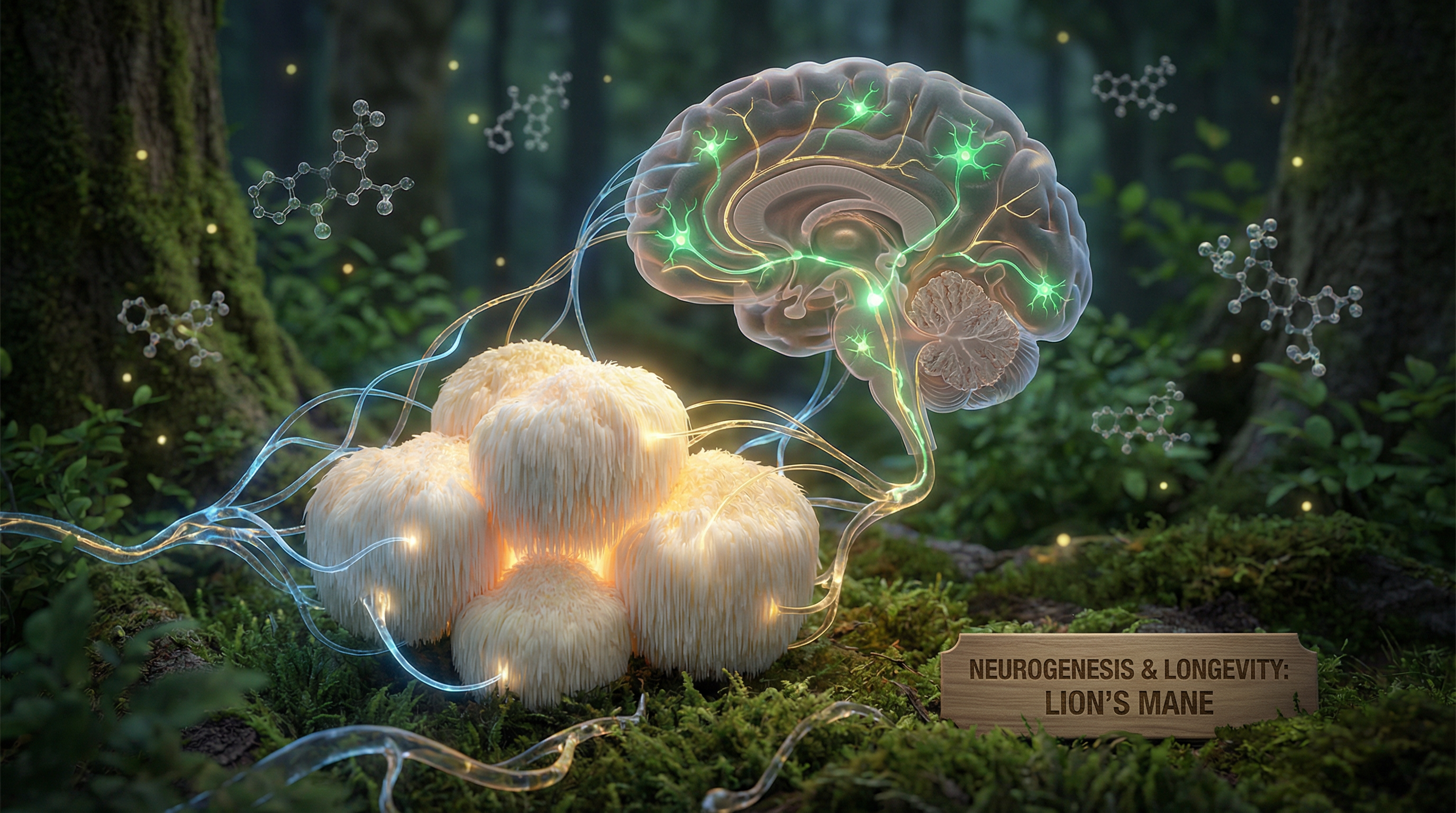
Lion’s mane mushroom (Hericium erinaceus) looks like a white waterfall of cascading spines — and its effects on the brain are equally striking. Unlike most supplements that merely protect neurons, lion’s mane does something almost no other compound can do: it actively stimulates the growth of new nerve cells and their connections.
This makes it one of the most genuinely exciting longevity supplements in the current research landscape, with growing evidence for its role in preventing cognitive decline, supporting mood, and maintaining the gut-brain axis that underlies whole-body health.
What Is Lion’s Mane?
Lion’s mane is a medicinal mushroom native to North America, Europe, and Asia. It has been used in traditional Chinese and Japanese medicine for centuries — consumed as food and used as a tonic for the stomach, nerves, and brain.
Modern research has identified two unique groups of bioactive compounds responsible for its neurological effects:
- Hericenones — found in the fruiting body (the visible mushroom), stimulate Nerve Growth Factor (NGF) synthesis
- Erinacines — found in the mycelium (root-like structures), are even more potent NGF stimulators and can cross the blood-brain barrier
Both compound classes work through the same critical pathway: increasing production of Nerve Growth Factor (NGF), a protein essential for the growth, maintenance, and survival of neurons.
The NGF Connection: Why This Matters for Aging
Nerve Growth Factor is crucial for:
- Neuronal survival: Prevents programmed neuron death in the hippocampus and cortex
- Synaptic plasticity: Maintains and strengthens connections between neurons
- Myelination: Supports the protective myelin sheath around nerve fibers
- Memory consolidation: Required for long-term potentiation (the cellular basis of memory)
NGF levels naturally decline with age — and this decline correlates strongly with cognitive deterioration. Low NGF is associated with Alzheimer’s disease, Parkinson’s disease, and age-related memory loss.
Lion’s mane is currently the only orally available supplement with demonstrated ability to increase NGF synthesis in human brain tissue — making it uniquely positioned in any longevity-focused cognitive protocol.
Key Health Benefits
Cognitive Enhancement and Memory
Multiple clinical trials have demonstrated lion’s mane’s cognitive benefits in aging adults:
A landmark 2009 double-blind trial in Phytotherapy Research gave 50-80 year old adults with mild cognitive impairment either 1,000 mg lion’s mane or placebo three times daily for 16 weeks. The lion’s mane group showed significantly higher scores on cognitive function scales — but cognitive scores declined again after supplementation stopped, suggesting ongoing use is required.
A 2020 study in Journal of Neurochemistry found lion’s mane extracts promoted myelination of neurons, potentially offering protection against multiple sclerosis-type neurodegeneration.
A 2023 randomized trial in Journal of Dietary Supplements found young adults (18-45) taking 1.8g/day lion’s mane showed improved processing speed and working memory compared to placebo after 12 weeks.
Neuroprotection and Alzheimer’s Prevention
Lion’s mane acts on multiple pathways relevant to Alzheimer’s disease:
- Amyloid-beta clearance: Promotes microglial activity that clears amyloid plaques
- Tau phosphorylation: May reduce abnormal tau protein tangles
- Oxidative stress: Reduces neuronal oxidative damage through antioxidant pathways
- Neuroinflammation: Inhibits NF-κB-mediated inflammatory pathways in the brain
Animal studies show significant protection against memory loss when lion’s mane is administered before or alongside Alzheimer’s-inducing compounds. Human prevention trials are ongoing.
Mood, Anxiety, and Depression
Perhaps surprisingly, lion’s mane has meaningful effects on mood through two mechanisms:
- NGF in limbic system: The amygdala and hippocampus are rich in NGF receptors — stimulating these may improve emotional regulation
- Gut microbiome modulation: Lion’s mane acts as a prebiotic, supporting bacteria that produce GABA and serotonin precursors
A 2010 clinical trial in Biomedical Research found menopausal women taking lion’s mane cookies for 4 weeks reported significantly less anxiety and irritability compared to placebo — not through sedation but through reduced neurological reactivity to stress.
A 2019 study found lion’s mane reduced symptoms of depression and anxiety in patients with overweight and obesity by improving inflammatory markers and gut bacteria composition.
Peripheral Nerve Regeneration
One of lion’s mane’s most remarkable properties is its ability to accelerate peripheral nerve repair. Studies show:
- Accelerated regeneration after crush injuries to peripheral nerves
- Improved functional recovery of motor and sensory neurons
- Potential benefit for diabetic peripheral neuropathy
This peripheral nerve effect also benefits the vagus nerve — the key pathway of the gut-brain axis — potentially explaining lion’s mane’s broad effects on both cognition and mood.
Gut Health and the Gut-Brain Axis
Lion’s mane contains beta-glucan polysaccharides that function as prebiotics, selectively feeding beneficial gut bacteria including Lactobacillus and Bifidobacterium species. A healthy gut microbiome produces:
- Short-chain fatty acids (SCFAs): Fuel colonocytes and reduce intestinal inflammation
- Serotonin precursors: 95% of serotonin is produced in the gut
- GABA: The primary inhibitory neurotransmitter that reduces anxiety
This gut-brain connection explains why lion’s mane may improve mood even in people without obvious cognitive issues — a healthy gut is a prerequisite for a healthy mind.
Anti-Aging Cellular Effects
Beyond the nervous system, lion’s mane affects aging pathways:
- Antioxidant enzymes: Upregulates superoxide dismutase (SOD) and catalase
- Anti-inflammatory: Reduces TNF-α, IL-6, and COX-2 expression
- Immune modulation: Activates natural killer cells and macrophages
- Mitophagy support: Beta-glucans may support mitochondrial quality control
Dosage and Forms
Recommended Doses
| Goal | Dose | Duration |
|---|---|---|
| Cognitive enhancement | 500–1,000 mg/day | 8–16 weeks minimum |
| Neuroprotection/prevention | 500–3,000 mg/day | Long-term |
| Mood and anxiety | 1,000–2,000 mg/day | 4–12 weeks |
| Athletic nerve recovery | 1,000–3,000 mg/day | Ongoing |
Clinical trials have used doses ranging from 750mg to 5g/day — all without significant adverse effects.
Fruiting Body vs. Mycelium: Which Is Better?
This is the most important decision when choosing a lion’s mane supplement:
| Form | Contains | Pros | Cons |
|---|---|---|---|
| Fruiting body extract | Hericenones, beta-glucans | More researched, clean | Lower erinacine content |
| Mycelium | Erinacines | More potent NGF effect | Often grown on grain (diluted) |
| Dual extract | Both | Most complete | Higher cost |
Best choice: A dual extract standardized for both beta-glucans (above 30%) AND erinacines, from a supplier that tests for heavy metals and grain content. Avoid mycelium-only products grown on oats or rice — many are mostly grain starch with minimal mushroom content.
How to Take It
- With or without food — equally well absorbed
- Morning or early afternoon preferred — some users find it mildly stimulating
- Consistent daily use — effects accumulate over weeks, not days
- Cycling: Not required, but some practitioners suggest 5 days on, 2 days off
Stacking Lion’s Mane With Other Supplements
Lion’s mane pairs exceptionally well with:
- Magnesium glycinate: Both support neurological health — magnesium provides the mineral cofactors NGF-stimulated neurons need
- NMN or NAD+ precursors: NAD+ is required for neuronal repair and the SIRT1 pathway that protects neurons
- Bacopa monnieri: Classical Ayurvedic nootropic with complementary mechanisms for memory
- Omega-3 fatty acids: DHA supports neuronal membrane integrity that lion’s mane-stimulated new neurons require
- Rhodiola rosea: Adaptogen that reduces cortisol, which destroys neurons in the hippocampus
A practical brain longevity stack: Lion’s mane (1g) + Magnesium glycinate (400mg) + NMN (300mg) taken daily covers neurogenesis, mineral support, and NAD+ fuel simultaneously.
Food vs. Supplement
Lion’s mane is also edible and delicious — often compared to crab or lobster in texture. Fresh or dried mushroom provides some benefit, but supplement extracts deliver 5-10x the concentration of active compounds per gram.
For therapeutic benefits (especially cognitive), standardized extract supplements are recommended over culinary use alone.
Safety and Side Effects
Lion’s mane has an excellent safety profile in all published human trials:
- No serious adverse events reported at doses up to 5g/day
- Most common side effects: mild digestive discomfort (rare), skin rash in a small number of users
- No known drug interactions
Precautions:
- Mushroom allergy: Avoid if allergic to mushrooms
- Blood thinners: Theoretical interaction due to antiplatelet effects — consult doctor if on warfarin
- Pregnancy: Insufficient safety data
Frequently Asked Questions
Q: How long does lion’s mane take to work? A: Most people notice mood and focus improvements within 2–4 weeks. Cognitive benefits in trials were measurable at 4 weeks but strongest at 12–16 weeks. NGF-related neurogenesis takes months to fully develop.
Q: Can lion’s mane reverse existing cognitive decline? A: Clinical evidence suggests it can slow and partially reverse mild cognitive impairment. For advanced dementia, evidence is limited — it’s more effective as prevention than late-stage treatment.
Q: Is lion’s mane safe to take every day long-term? A: Yes — no studies have found harm from long-term daily use. It’s used as a food in Asia for centuries without reported issues.
Q: What’s the difference between lion’s mane and other nootropics? A: Most nootropics work by increasing neurotransmitter levels (like caffeine or racetams). Lion’s mane is unique in that it stimulates the actual growth and repair of neurons — a fundamentally different and more lasting mechanism.
Q: Does lion’s mane need to be taken with food? A: No — it’s absorbed equally well with or without food. Some people prefer taking it with a meal to avoid any potential mild digestive sensitivity, especially when starting out.
Lion’s mane stands apart from most longevity supplements because it addresses a root cause of cognitive aging — declining NGF and progressive neuron loss — rather than simply managing symptoms. For anyone building a comprehensive longevity supplement protocol, lion’s mane is one of the highest-evidence additions for protecting the brain decades into the future.