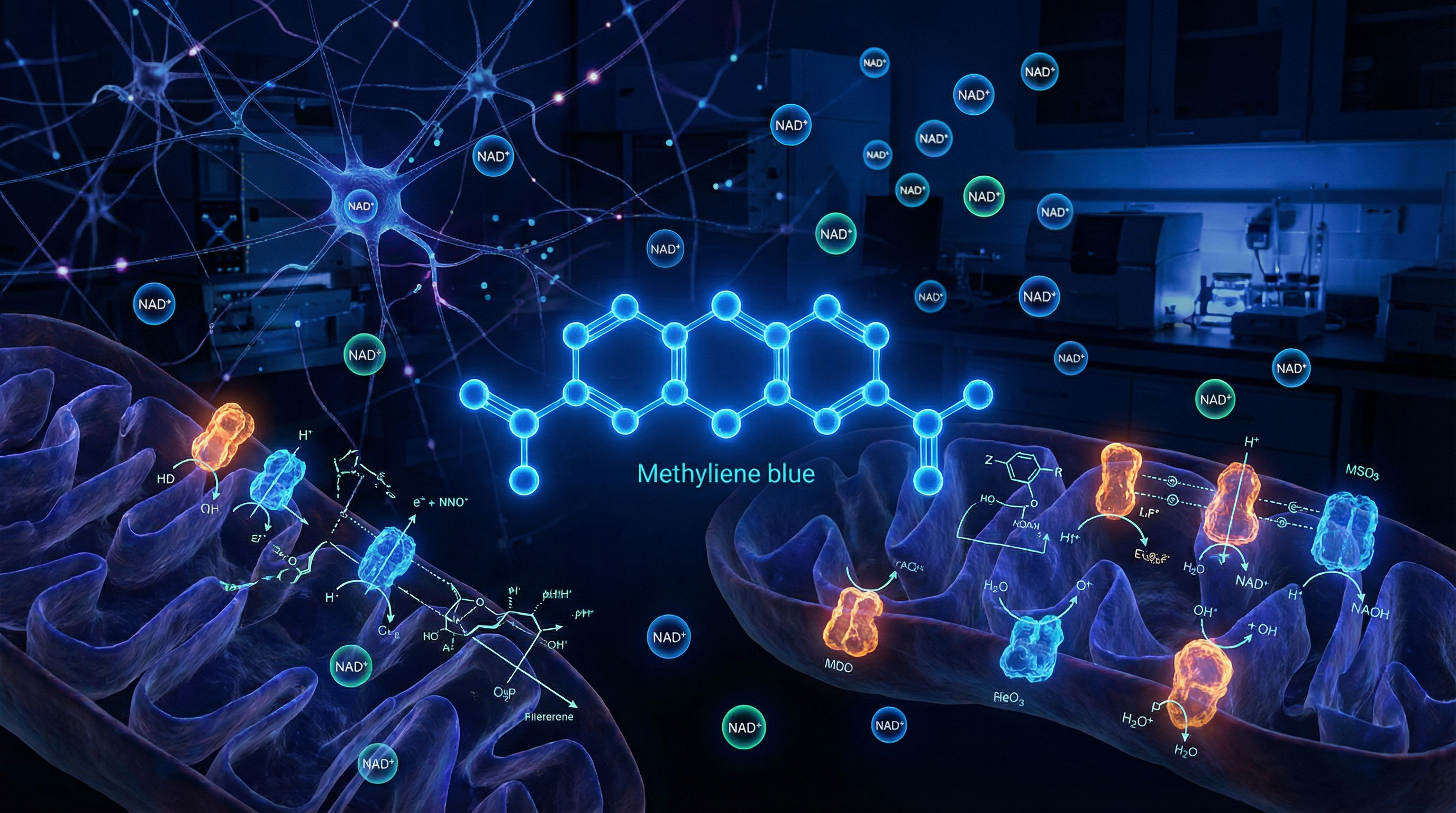
A century-old dye used to treat malaria is quietly becoming one of the most intriguing compounds in longevity research. Methylene blue, first synthesized in 1876, has re-emerged as a mitochondrial enhancer with the potential to slow cellular aging, protect neurons, and improve energy metabolism. For anyone serious about optimizing healthspan, it deserves a closer look.
What Is Methylene Blue?
Methylene blue (methylthioninium chloride) is a synthetic compound originally developed as a textile dye. It was the first fully synthetic drug used in medicine, initially prescribed for malaria in the late 19th century. Today it holds FDA approval for treating methemoglobinemia, a condition where hemoglobin cannot effectively release oxygen to tissues.
What makes methylene blue unique among longevity compounds is its ability to act as an alternative electron carrier in the mitochondrial electron transport chain. Unlike most supplements that support mitochondrial function indirectly, methylene blue can shuttle electrons directly between Complex I and Complex III, bypassing damaged or inefficient segments of the chain.
How Methylene Blue Works: Mechanism of Action
The longevity benefits of methylene blue stem from several interconnected mechanisms:
Mitochondrial Electron Shuttling
Methylene blue cycles between its oxidized form (blue) and reduced form (leucomethylene blue, colorless) within mitochondria. This redox cycling allows it to accept electrons from NADH at Complex I and donate them directly to cytochrome c, effectively functioning as a bypass circuit when the electron transport chain is impaired. The result is improved ATP production and reduced electron leakage that would otherwise generate damaging reactive oxygen species (ROS).
NAD+ Recycling
By accepting electrons from NADH, methylene blue helps regenerate NAD+ — the essential coenzyme that declines with age and drives much of cellular aging. This NAD+-recycling capacity complements other NAD+ boosting strategies and positions methylene blue as a functional partner to NMN and NR supplementation.
Antioxidant Activity at Low Doses
At low (nanomolar to low micromolar) concentrations, methylene blue acts as a potent antioxidant. It neutralizes superoxide and other ROS directly, while also upregulating endogenous antioxidant enzymes like superoxide dismutase (SOD) and catalase through Nrf2 pathway activation. This is important because oxidative stress is a primary driver of mitochondrial dysfunction and aging.
Autophagy and Mitophagy Enhancement
Emerging research suggests methylene blue can stimulate autophagy and mitophagy — the cellular recycling processes that clear damaged proteins and dysfunctional mitochondria. Efficient mitophagy is essential for maintaining a healthy mitochondrial pool as we age.
Key Health Benefits of Methylene Blue
Neuroprotection and Cognitive Enhancement
The brain consumes roughly 20% of the body’s energy despite representing only 2% of body mass, making neurons especially vulnerable to mitochondrial decline. Methylene blue crosses the blood-brain barrier readily and accumulates in neural tissue at concentrations 10 times higher than in the bloodstream.
In preclinical studies, methylene blue has demonstrated remarkable neuroprotective effects. A 2021 study published in Aging Cell found that low-dose methylene blue improved memory consolidation and spatial learning in aged mice by enhancing mitochondrial complex IV activity in the hippocampus. Research at the University of Texas at San Antonio showed that methylene blue increased brain cytochrome oxidase activity by 25%, correlating with improved memory retention in behavioral tests.
Human studies are still limited but promising. A randomized controlled trial published in Neurobiology of Aging found that a single low dose (0.5 mg/kg) of methylene blue increased functional MRI responses during sustained attention and short-term memory tasks in healthy volunteers. Participants showed enhanced activity in the insular cortex and prefrontal regions associated with executive function.
Mitochondrial Biogenesis
Methylene blue activates PGC-1α, the master regulator of mitochondrial biogenesis, through AMPK-dependent signaling. A 2020 study in Free Radical Biology and Medicine demonstrated that chronic low-dose methylene blue treatment increased mitochondrial mass by 30% in human fibroblasts. This is particularly relevant for aging, since mitochondrial number and quality decline progressively after age 30.
This biogenesis-promoting effect works synergistically with compounds in a well-designed mitochondrial supplement stack, making methylene blue a compelling addition for those already supporting mitochondrial health.
Skin Aging and Cellular Senescence
One of the most visually compelling applications of methylene blue is in skin aging. Research from the University of Maryland published in Scientific Reports found that methylene blue outperformed retinol, the gold standard anti-aging ingredient, in several skin-relevant metrics. In human skin fibroblasts from both young and old donors, methylene blue at 100 nanomolar concentrations:
- Increased cell proliferation rate by 20%
- Slowed cellular senescence
- Reduced markers of oxidative damage
- Increased skin thickness and hydration in a 3D skin model
These findings suggest methylene blue may delay skin aging at the cellular level by improving mitochondrial function in dermal fibroblasts, rather than simply stimulating collagen production.
Lifespan Extension in Model Organisms
The ultimate test for any longevity compound is whether it extends lifespan. Methylene blue has shown positive results across multiple model organisms:
- C. elegans (nematodes): A 2014 study in Antioxidants and Redox Signaling found that methylene blue extended lifespan by up to 16% in wild-type worms, associated with decreased ROS production and improved stress resistance.
- D. melanogaster (fruit flies): Chronic low-dose treatment increased median lifespan by approximately 10% while improving climbing ability, a measure of healthspan.
- Mice: While longevity data in mammals is still limited, aged mice treated with methylene blue show improved cognitive function, better mitochondrial respiration, and reduced markers of cellular senescence.
No human longevity trials have been completed, but the consistent cross-species benefits and well-characterized mechanisms make methylene blue one of the more evidence-backed candidates for human anti-aging research.
Dosage Guidelines
Methylene blue dosage is critical because it exhibits a biphasic dose-response — low doses are beneficial while high doses can be harmful. This phenomenon, known as hormesis, means more is definitely not better.
| Population | Dose | Frequency | Notes |
|---|---|---|---|
| General longevity support | 0.5–2 mg/kg | Daily or cycling | Start at lower end |
| Cognitive enhancement | 0.5–1 mg/kg | Daily | Stay within low-dose range |
| Research protocols | 0.5–4 mg/kg | Varies | Higher doses only under supervision |
| Typical oral dose (70 kg adult) | 15–50 mg | Daily | Pharmaceutical-grade only |
Important dosing considerations:
- Always use USP pharmaceutical-grade methylene blue, not industrial or aquarium-grade products
- Start with the lowest effective dose (0.5 mg/kg) and increase gradually
- Some practitioners recommend cycling (5 days on, 2 days off) to prevent tolerance
- Methylene blue will turn urine blue-green — this is normal and harmless
Stacking Methylene Blue With Other Supplements
Methylene blue pairs well with several longevity compounds due to its unique mechanism of action:
Synergistic combinations:
- NMN or NR: Methylene blue recycles NAD+ while NMN provides the precursor — complementary pathways for NAD+ optimization
- CoQ10/Ubiquinol: Both support the electron transport chain but at different complexes, providing broader mitochondrial coverage
- PQQ: Promotes mitochondrial biogenesis through different signaling pathways than methylene blue
- Creatine: Supports the phosphocreatine energy system, complementing methylene blue’s ETC enhancement
Combinations to avoid:
- SSRIs and SNRIs: Methylene blue is a potent monoamine oxidase inhibitor (MAOI). Combining it with serotonergic medications can cause serotonin syndrome, a potentially life-threatening condition
- High-dose antioxidants: Very high doses of vitamin C or NAC may interfere with methylene blue’s redox cycling mechanism
Safety Profile and Precautions
Methylene blue has a long safety track record in clinical medicine, with well-established pharmacokinetics at therapeutic doses. However, several important precautions apply:
Contraindications:
- G6PD (glucose-6-phosphate dehydrogenase) deficiency — methylene blue can trigger severe hemolytic anemia in these individuals. Testing for G6PD deficiency before use is strongly recommended
- Current use of serotonergic medications (SSRIs, SNRIs, MAOIs, triptans)
- Pregnancy and breastfeeding (insufficient safety data)
- Severe renal impairment (methylene blue is renally cleared)
Common side effects at low doses:
- Blue-green discoloration of urine (universal and harmless)
- Mild blue tinting of the tongue and lips (temporary)
- Occasional GI discomfort (usually resolves with food)
Side effects at high doses (greater than 5 mg/kg):
- Chest pain and elevated blood pressure
- Confusion and dizziness
- Paradoxical increase in methemoglobin
- Pro-oxidant effects (the opposite of the desired antioxidant benefit)
Frequently Asked Questions
Is methylene blue the same as the dye used in biology class?
Yes, it is the same compound, but pharmaceutical-grade methylene blue (USP grade) undergoes rigorous purification to remove heavy metals and other contaminants. Never use laboratory, industrial, or aquarium-grade methylene blue for supplementation. Only USP-grade products with certificates of analysis are appropriate for human use.
Can I take methylene blue with my NMN supplement?
Yes, and this combination may be particularly effective. Methylene blue helps recycle NAD+ from NADH, while NMN provides the raw precursor material for NAD+ synthesis. Together, they support NAD+ levels through complementary mechanisms. However, always start each supplement separately to assess individual tolerance before combining.
How quickly does methylene blue work?
Methylene blue has high oral bioavailability (approximately 72%) and reaches peak plasma concentrations within 1–2 hours. Acute cognitive effects may be noticed within hours of the first dose. However, mitochondrial biogenesis and the deeper cellular benefits require consistent use over weeks to months, similar to most longevity interventions.
Does methylene blue stain teeth?
At typical supplementation doses (15–50 mg), temporary blue tinting of the tongue and lips can occur but usually fades within a few hours. Significant teeth staining is uncommon at low doses. Swallowing the capsule quickly with water and avoiding holding liquid formulations in the mouth minimizes any cosmetic effects.
Is methylene blue safe for long-term use?
Methylene blue has been used in clinical medicine for over a century, and chronic low-dose use appears well-tolerated in available data. However, long-term human studies specifically for longevity applications are lacking. The most prudent approach is to use pharmaceutical-grade product at low doses, cycle periodically, monitor for side effects, and consult a healthcare provider familiar with its pharmacology.
The Bottom Line
Methylene blue stands out among longevity compounds for its unique ability to directly enhance mitochondrial electron transport, recycle NAD+, and stimulate mitochondrial biogenesis. Its century-long medical history provides a safety foundation that most novel longevity compounds lack. While human aging studies are still needed, the consistent benefits across model organisms and well-understood mechanisms make it a compelling addition to an evidence-based longevity strategy.
If you are building a comprehensive supplement stack for longevity, methylene blue offers a mechanism of action distinct from any other available compound — direct mitochondrial electron shuttling. Start low, use pharmaceutical-grade product, respect the contraindications, and track your response over time.