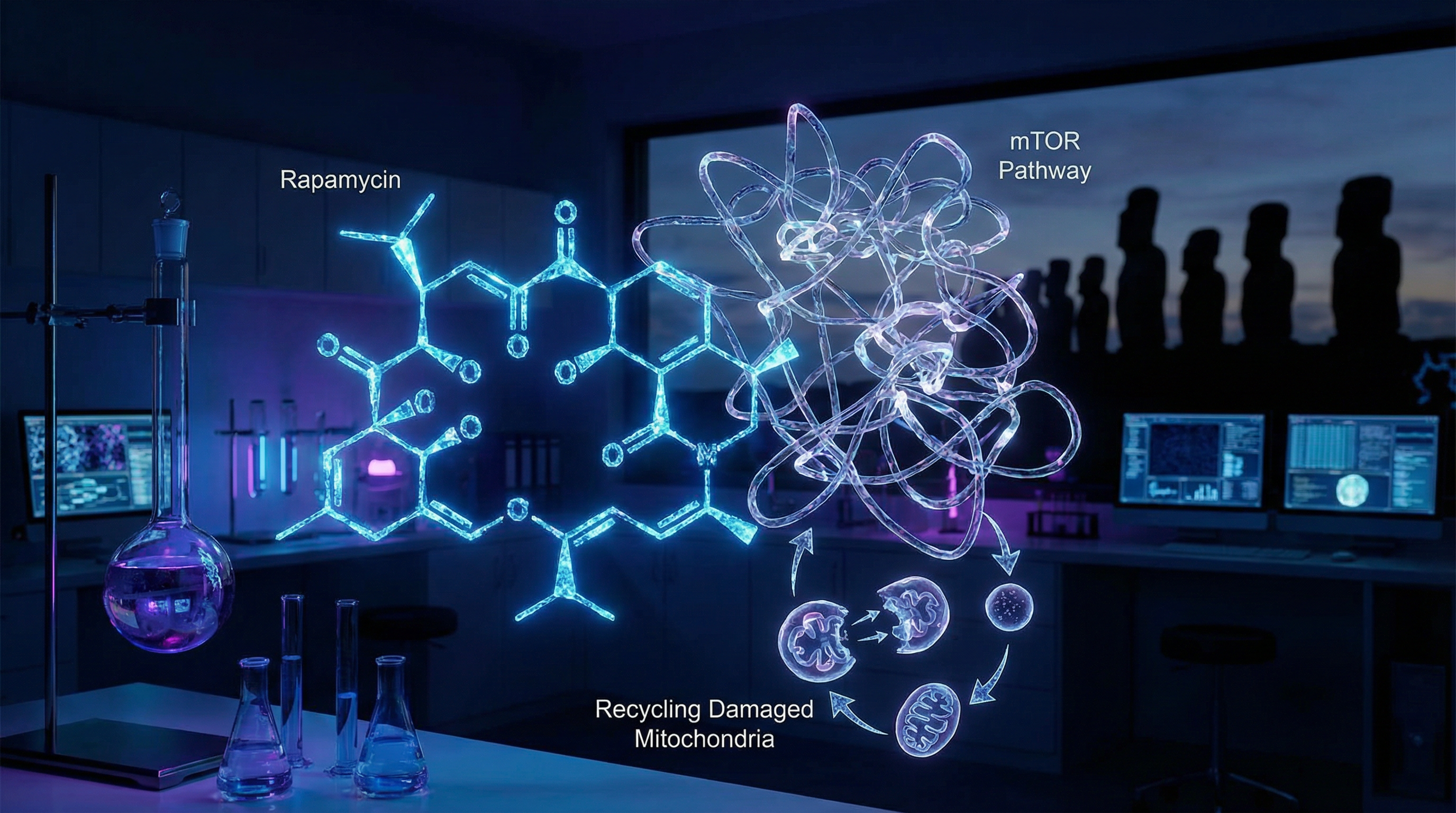
Few compounds in longevity research have generated as much excitement — and debate — as rapamycin. Originally discovered in the soil of Easter Island (Rapa Nui) in the 1970s, this FDA-approved immunosuppressant has become the single most replicated pharmacological intervention for lifespan extension in laboratory animals. If you’re serious about understanding the frontier of anti-aging science, rapamycin and its target, mTOR, deserve your full attention.
What Is Rapamycin?
Rapamycin (also known as sirolimus) is a naturally occurring compound produced by the bacterium Streptomyces hygroscopicus. It was first isolated from a soil sample collected on Easter Island in 1972 and initially developed as an antifungal agent. Researchers soon discovered its powerful immunosuppressive properties, leading to FDA approval in 1999 for preventing organ transplant rejection.
But rapamycin’s story took a dramatic turn when aging researchers found it could extend lifespan in mice — even when started late in life. This discovery, published in the landmark 2009 NIA Interventions Testing Program (ITP) study, catapulted rapamycin into the spotlight as perhaps the most promising pharmacological candidate for human longevity.
How mTOR Controls Aging
To understand rapamycin, you first need to understand its target: mTOR (mechanistic Target of Rapamycin). mTOR is a nutrient-sensing protein kinase that acts as a master regulator of cell growth, metabolism, and aging. It exists in two complexes:
- mTORC1 — Drives cell growth, protein synthesis, and energy storage. Inhibited by rapamycin.
- mTORC2 — Regulates cell survival and cytoskeletal organization. Less affected by rapamycin at low doses.
The Growth vs. Longevity Tradeoff
When nutrients are abundant, mTOR is highly active — signaling cells to grow, divide, and build. This is essential during development and recovery from injury. However, chronically elevated mTOR activity accelerates aging through several mechanisms:
- Suppressed autophagy — mTOR blocks the cellular recycling process that clears damaged proteins and organelles
- Mitochondrial dysfunction — Overactive mTOR impairs mitochondrial quality control and biogenesis
- Cellular senescence — High mTOR converts quiescent cells into senescent, inflammatory cells
- Stem cell exhaustion — Chronic mTOR activity depletes the regenerative capacity of stem cells
- Chronic inflammation — mTOR drives the production of pro-inflammatory cytokines
This is why caloric restriction — the gold standard of longevity interventions — works partly through mTOR inhibition. Rapamycin offers a pharmacological shortcut to the same pathway.
The Evidence for Lifespan Extension
Animal Studies
Rapamycin is the most robustly validated lifespan-extending drug in preclinical research:
- NIA ITP (2009): Rapamycin extended median lifespan by 9% in males and 14% in females when started at 600 days of age (equivalent to roughly 60 human years)
- Follow-up ITP studies: Confirmed dose-dependent lifespan extension, with higher doses producing greater effects
- Mouse studies (multiple labs): Consistent 10–25% median lifespan increases across genetic backgrounds
- Other species: Lifespan extension demonstrated in yeast, worms, flies, and dogs (the Dog Aging Project)
What makes these results remarkable is their consistency. No other drug has been replicated across so many labs, species, and genetic backgrounds.
Healthspan Benefits in Animals
Rapamycin doesn’t just extend lifespan — it extends healthspan. Treated animals show:
- Reduced cancer incidence and delayed tumor onset
- Improved cardiac function in aging hearts
- Better cognitive performance and reduced neurodegeneration
- Enhanced immune function (paradoxically, despite its immunosuppressive label)
- Preserved muscle mass and physical function
Human Data
While we don’t yet have completed randomized controlled trials for rapamycin’s effects on human aging, emerging data is encouraging:
- Mannick et al. (2014, 2018): Low-dose mTOR inhibition with the rapamycin analog everolimus improved immune function in elderly adults, enhancing response to influenza vaccination by approximately 20%
- PEARL trial: Topical rapamycin improved skin aging markers in a small clinical study
- Participatory studies: The Rapamycin User Group and AgelessRx RAP trial are collecting real-world data on low-dose rapamycin use in healthy adults
- Dog Aging Project: Rapamycin improved cardiac function in companion dogs, providing a model closer to human physiology
How Rapamycin Activates Autophagy
One of rapamycin’s most important anti-aging mechanisms is the activation of autophagy — the cellular self-cleaning process. When mTORC1 is active, it phosphorylates and suppresses ULK1, a key autophagy initiation protein. By inhibiting mTORC1, rapamycin releases this brake, allowing cells to:
- Engulf and digest damaged mitochondria (mitophagy)
- Clear misfolded protein aggregates linked to neurodegeneration
- Recycle cellular components for energy and building blocks
- Remove senescent cells and reduce inflammatory burden
This connection between mTOR inhibition and autophagy explains much of rapamycin’s broad anti-aging effects. It’s also why rapamycin pairs conceptually with other autophagy-enhancing strategies like intermittent fasting and spermidine supplementation.
Dosing Protocols: What Longevity Practitioners Use
Rapamycin is a prescription medication, and any use for longevity should be under medical supervision. That said, the longevity community has converged on a general protocol that differs significantly from the daily high-dose regimen used in transplant medicine.
Common Longevity Dosing Approaches
| Protocol | Dose | Frequency | Rationale |
|---|---|---|---|
| Low-dose intermittent | 1–2 mg | Once weekly | Minimize immunosuppression; target mTORC1 selectively |
| Moderate-dose intermittent | 3–5 mg | Once weekly | Stronger mTOR inhibition with recovery period |
| Cycling protocol | 5–6 mg | Weekly for 8 weeks on, 2–4 weeks off | Periodic mTOR suppression with full immune recovery |
| Biweekly | 5–6 mg | Every 2 weeks | Lower cumulative dose with sustained effect |
Why Intermittent Dosing Matters
The key insight is that intermittent low-dose rapamycin preferentially inhibits mTORC1 (the pro-aging complex) while largely sparing mTORC2. Daily high-dose rapamycin, as used in transplant patients, suppresses both complexes, leading to metabolic side effects and immunosuppression. The weekly dosing strategy exploits rapamycin’s long half-life (approximately 62 hours) to create a pulsatile pattern of mTOR inhibition followed by recovery.
Monitoring
Practitioners typically monitor:
- Complete blood count (CBC)
- Fasting glucose and HbA1c
- Lipid panel (rapamycin can transiently raise cholesterol and triglycerides)
- Liver and kidney function
- Mouth sores (early indicator of dose being too high)
Synergy With NAD+ and Mitochondrial Support
Rapamycin’s mechanism is complementary to NAD+ boosting strategies. While rapamycin enhances autophagy and mitochondrial quality control from the top down (by suppressing mTOR), NAD+ precursors like NMN and NR support mitochondrial function from the bottom up by fueling sirtuins and maintaining the electron transport chain.
Together, these pathways address two of the most critical hallmarks of aging:
- mTOR inhibition (rapamycin) → Enhanced autophagy, reduced senescence, improved stem cell function
- NAD+ restoration (NMN/NR) → Improved mitochondrial bioenergetics, DNA repair, sirtuin activation
Some longevity researchers have proposed that combining mTOR inhibition with NAD+ precursors and senolytic compounds could target multiple aging hallmarks simultaneously — though this remains an area of active investigation rather than established protocol.
Safety Profile and Side Effects
Rapamycin’s safety profile at longevity doses differs substantially from transplant doses. Most side effects are dose-dependent and reversible:
Common (Dose-Dependent)
- Mouth sores (aphthous ulcers) — The most frequently reported side effect; usually mild at low doses
- Transient lipid elevation — Cholesterol and triglycerides may rise temporarily
- Mild glucose elevation — Fasting glucose may increase slightly
- Delayed wound healing — Most relevant at higher doses
Rare at Longevity Doses
- Significant immunosuppression (more associated with daily high-dose use)
- Anemia or low platelet counts
- Interstitial pneumonitis (extremely rare at weekly low doses)
Important Contraindications
- Active infections or immunocompromised states
- Planned surgery (stop 2–4 weeks before)
- Pregnancy or breastfeeding
- Severe liver disease
- Concurrent use of strong CYP3A4 inhibitors (grapefruit, ketoconazole)
The distinction between transplant dosing and longevity dosing cannot be overstated. Many of the alarming side effects attributed to rapamycin come from studies of daily doses 5–10 times higher than what longevity practitioners use.
The Debate: Is It Ready for Healthy Adults?
The longevity community is split on rapamycin. Proponents point to:
- The strongest preclinical evidence of any longevity drug
- A well-characterized mechanism targeting a fundamental aging pathway
- Decades of clinical experience with the drug’s pharmacology
- Growing real-world evidence from longevity practitioners
Skeptics counter with:
- No completed large-scale human longevity trials
- Immunomodulatory effects that could increase infection risk
- Metabolic side effects that may offset some benefits
- The challenge of extrapolating animal data to human aging
The truth likely lies somewhere in between. Rapamycin is not a casual supplement — it’s a prescription drug with real pharmacological effects. But for individuals working with knowledgeable physicians who can monitor bloodwork and adjust dosing, it represents one of the most scientifically grounded longevity interventions currently available.
Frequently Asked Questions
Is rapamycin the same as sirolimus?
Yes. Rapamycin is the original name for the compound, while sirolimus is the generic pharmaceutical name. Everolimus and temsirolimus are analogs (rapalogs) with similar mechanisms but different pharmacokinetics.
Can I take rapamycin without a prescription?
Rapamycin is a prescription medication in most countries. It should only be used under the supervision of a physician who can monitor bloodwork, adjust dosing, and manage potential side effects. Self-medication with rapamycin is strongly discouraged.
Does rapamycin suppress the immune system?
At transplant doses (daily, high-dose), rapamycin is a potent immunosuppressant. However, at the low intermittent doses used for longevity, studies suggest it may actually enhance certain aspects of immune function — particularly the response to vaccines in older adults. The intermittent dosing schedule allows the immune system to recover between doses.
How long does it take for rapamycin to show effects?
Animal studies show benefits emerging within weeks to months. In humans, biomarker changes (such as improved immune function or altered mTOR signaling markers) have been observed within 6–12 weeks. Longevity effects, by their nature, require years to decades to fully assess.
Can rapamycin be combined with NMN or other longevity supplements?
Many longevity practitioners combine low-dose rapamycin with NAD+ precursors, senolytics, and other supplements. Since rapamycin targets mTOR while NMN targets NAD+ pathways, they address different hallmarks of aging. However, combination protocols should always be discussed with a healthcare provider.
The Bottom Line
Rapamycin stands apart in longevity science. No other drug has such consistent, replicated evidence of lifespan extension across multiple species. Its mechanism — inhibiting the mTOR growth pathway to activate autophagy, improve mitochondrial function, and reduce cellular senescence — addresses fundamental drivers of aging rather than symptoms.
While we await definitive human longevity trials, the convergence of animal data, mechanistic understanding, and early human studies makes rapamycin one of the most closely watched compounds in anti-aging medicine. If you’re building a comprehensive approach to longevity that already includes strategies like NAD+ optimization and mitochondrial support, understanding mTOR and rapamycin is essential context for where the science is heading.
This article is for informational purposes only and does not constitute medical advice. Rapamycin is a prescription medication. Consult your healthcare provider before making any changes to your supplement or medication regimen.