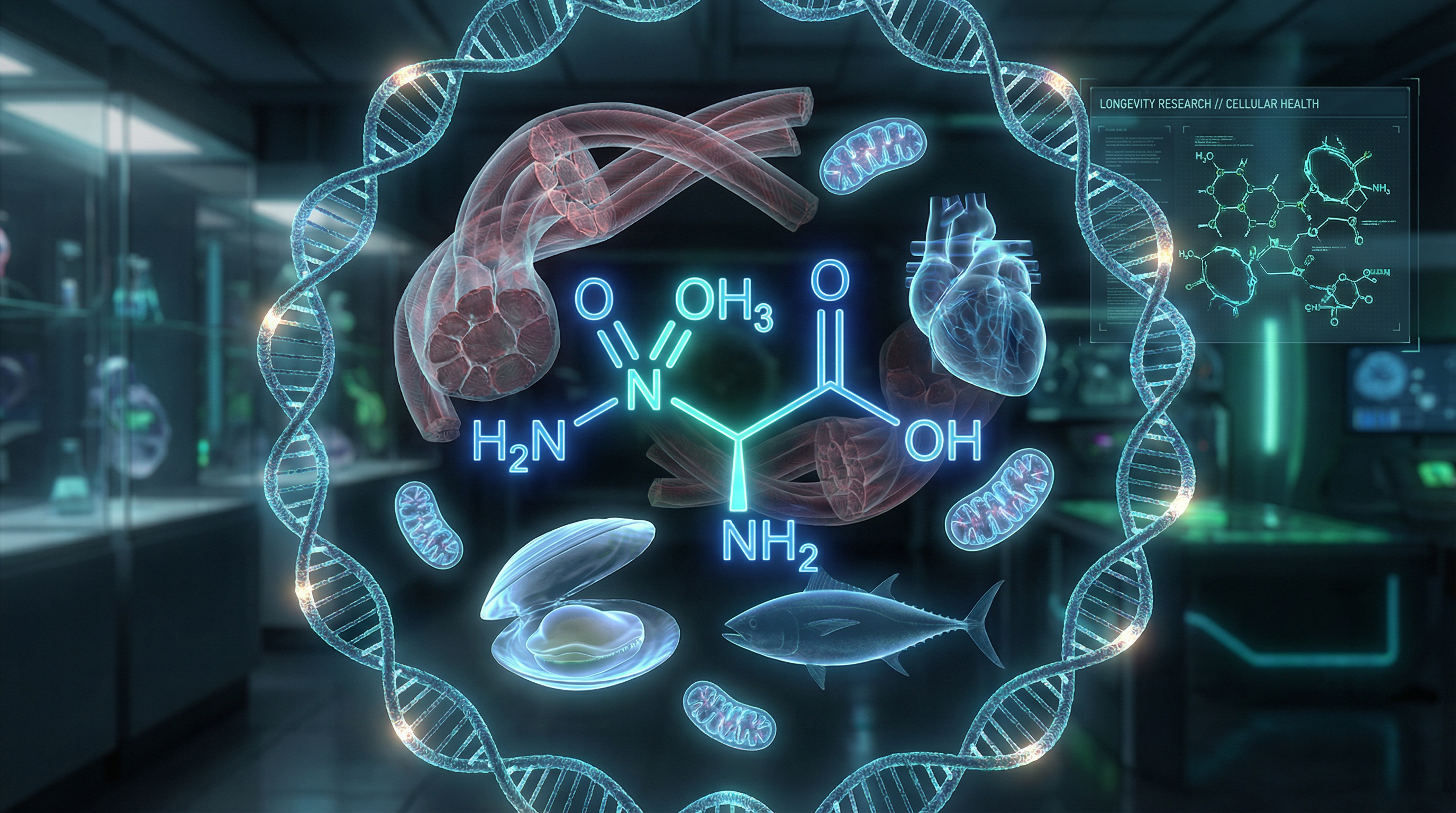
A landmark 2023 study published in Science shook the longevity research community: taurine deficiency is a driver of aging, and restoring taurine levels in middle-aged animals extended their healthy lifespan by up to 12%. In worms, flies, and mice, taurine supplementation didn’t just slow aging — it reversed multiple hallmarks of it.
What makes this finding so remarkable is that taurine is not a rare exotic compound. It’s an amino acid found in meat and seafood, produced naturally in the body, and sold cheaply in supplement stores. Yet most people over 40 are running low on it — and barely know it.
What Is Taurine?
Taurine (2-aminoethanesulfonic acid) is a sulfur-containing amino acid found in high concentrations throughout the body — particularly in the brain, heart, skeletal muscle, retina, and immune cells. Unlike most amino acids, it is not incorporated into proteins. Instead, it functions as a free-form molecule with a wide range of biological roles.
Taurine is considered “conditionally essential” — the body can synthesize it from cysteine and methionine, but production often falls short of what tissues need, especially with age or illness.
The Aging Connection: Why Taurine Declines
The 2023 Science paper by Singh et al. measured taurine levels across multiple species and found a consistent, dramatic pattern:
- Taurine blood levels in 60-year-old humans are roughly 80% lower than in 5-year-olds
- The decline follows a predictable trajectory beginning in early adulthood
- Animals with experimentally depleted taurine showed accelerated aging across multiple organ systems
The research team then asked: what happens when you restore taurine to youthful levels in aging animals?
The results were striking. Middle-aged mice given taurine supplementation showed:
- 12% longer lifespan on average
- Improved bone density and muscle strength
- Reduced body fat and better glucose tolerance
- Healthier immune function
- Better cognitive performance
- Reduced markers of cellular senescence and DNA damage
This makes taurine deficiency one of the few confirmed causal contributors to aging, not just a correlate.
How Taurine Supports Longevity
Mitochondrial Protection
Taurine plays a direct role in mitochondrial energy production. It’s required for the synthesis of mitochondrion-specific tRNA modifications that allow the electron transport chain to function efficiently. Without adequate taurine, mitochondrial protein synthesis becomes error-prone, reducing ATP output and increasing reactive oxygen species (ROS) production.
For anyone focused on mitochondrial health, taurine is a foundational nutrient — not optional.
Reducing Cellular Senescence
One of the most exciting findings from the 2023 study was taurine’s ability to reduce the accumulation of senescent cells — the “zombie cells” that stop dividing but refuse to die and secrete inflammatory molecules. Taurine supplementation:
- Lowered markers of senescence (p21, p16) in aged tissues
- Reduced SASP (senescence-associated secretory phenotype) inflammation
- Improved tissue regeneration capacity
This places taurine alongside dedicated senolytics like fisetin and quercetin as a compound that targets cellular aging directly.
DNA Protection and Telomere Preservation
Taurine reduces oxidative DNA damage and has been shown to preserve telomere length in aging cells. Shorter telomeres are a hallmark of biological aging and correlate with increased disease risk. Taurine’s antioxidant buffering — partly through its conjugation with bile acids and modulation of glutathione — helps protect chromosomal integrity.
Cardiovascular Health
Taurine is one of the most abundant amino acids in heart muscle and plays several cardioprotective roles:
- Calcium regulation: Modulates calcium flux in cardiomyocytes, improving cardiac contractility and rhythm
- Blood pressure: Multiple meta-analyses confirm taurine reduces both systolic and diastolic blood pressure
- Endothelial function: Improves nitric oxide availability and reduces arterial stiffness
- Lipid profile: Lowers LDL cholesterol and triglycerides while raising HDL in clinical trials
A 2016 meta-analysis in Food & Function analyzing 19 clinical trials found taurine supplementation (1–6 g/day) significantly reduced total cholesterol and triglycerides.
Brain Health and Neuroprotection
Taurine acts as an inhibitory neuromodulator, binding to GABA-A and glycine receptors in the brain. This contributes to:
- Neuroprotection: Protects neurons from excitotoxicity (excessive glutamate stimulation)
- Neurogenesis: Promotes growth of new neurons in the hippocampus
- Cognitive function: Animal studies show taurine reverses age-related learning and memory deficits
- Anxiety and stress: Calming effect via GABAergic signaling without sedation
Taurine also supports NAD+ metabolism in brain tissue, linking it to broader cellular energy pathways.
Muscle Health and Exercise Performance
Taurine is highly concentrated in skeletal muscle (approximately 19 mmol/kg dry weight) and serves multiple functions during exercise:
- Reduces muscle damage: Decreases exercise-induced oxidative stress and inflammation
- Improves endurance: Enhances fat oxidation and delays glycogen depletion
- Reduces cramps: Regulates calcium signaling and electrolyte balance in muscle cells
- Accelerates recovery: Lowers markers of muscle damage (creatine kinase, lactate dehydrogenase) post-exercise
Research in aging populations shows taurine helps preserve muscle mass and function — making it relevant for sarcopenia prevention as well as athletic performance.
Blood Sugar and Metabolic Health
Taurine improves insulin sensitivity through multiple mechanisms:
- Activates AMPK in skeletal muscle and liver
- Reduces ER (endoplasmic reticulum) stress, which drives insulin resistance
- Improves glucose transporter (GLUT4) expression
- Decreases hepatic glucose output
In type 2 diabetic patients, 1.5–3 g/day taurine supplementation reduced fasting glucose and HbA1c in several controlled trials.
Food Sources of Taurine
Taurine is found almost exclusively in animal products:
| Food | Taurine Content (mg/100g) |
|---|---|
| Clams | 520 mg |
| Scallops | 480 mg |
| Mussels | 655 mg |
| Tuna (canned) | 280 mg |
| Beef (dark meat) | 43 mg |
| Chicken (dark meat) | 34 mg |
| Whole milk | 6 mg |
Vegans and vegetarians produce very little dietary taurine and have measurably lower blood taurine levels, making supplementation especially important for this group.
Energy drinks often contain taurine (typically 1,000 mg per can), but the high sugar, caffeine, and other stimulants make them a poor delivery vehicle for health purposes.
Dosage and Supplementation
Recommended Doses
| Goal | Dose | Evidence Level |
|---|---|---|
| General longevity | 500–2,000 mg/day | Strong (animal + human) |
| Cardiovascular | 1,000–3,000 mg/day | Strong (multiple RCTs) |
| Exercise performance | 1,000–2,000 mg pre-workout | Moderate |
| Blood pressure | 1,500–3,000 mg/day | Strong |
| Cognitive support | 500–1,000 mg/day | Moderate |
Practical Tips
- Timing: Can be taken any time — with or without food. Some prefer mornings or pre-workout
- Form: Free-form L-taurine powder or capsules are equally effective
- Cycling: Not necessary — taurine is water-soluble and excess is excreted
- Stacking: Pairs well with magnesium (muscle function), NMN (energy metabolism), and creatine (muscle performance)
Safety Profile
Taurine has an exceptional safety record. The European Food Safety Authority (EFSA) has evaluated taurine up to 6,000 mg/day as safe for healthy adults. Key points:
- No documented toxicity even at high doses in humans
- No known serious drug interactions
- Safe for long-term use
- Well tolerated in elderly populations
Minor side effects at very high doses (above 3,000 mg/day) can include nausea or diarrhea in sensitive individuals.
Precautions:
- Kidney disease: Taurine is renally excreted; consult a doctor if kidneys are impaired
- Bipolar disorder: Some reports of mood changes at high doses — use with medical supervision
- Lithium interaction: May affect lithium clearance
Taurine vs. Other Longevity Supplements
How does taurine stack up compared to other popular longevity compounds?
| Supplement | Primary Mechanism | Taurine Advantage |
|---|---|---|
| NMN/NAD+ | Sirtuin activation, energy | Taurine is cheaper, more data on lifespan |
| Resveratrol | SIRT1 activation | Taurine has stronger mitochondrial evidence |
| Spermidine | Autophagy | Complementary mechanisms, stack both |
| Berberine | AMPK activation | Taurine is gentler, fewer side effects |
For a comprehensive longevity strategy, taurine is best viewed as a foundational supplement — low cost, high evidence, broad mechanisms — rather than a replacement for other targeted compounds.
Who Should Prioritize Taurine?
High priority:
- Adults over 40 (deficiency accelerates with age)
- Vegans and vegetarians (no dietary sources)
- People with cardiovascular risk factors
- Athletes and anyone doing regular intense exercise
- Anyone with metabolic syndrome or insulin resistance
Moderate priority:
- Younger adults looking for preventive longevity support
- Those with high stress loads (taurine is depleted by cortisol)
- People with sleep difficulties (calming GABAergic effects)
Frequently Asked Questions
Q: Is taurine in energy drinks the same as supplement taurine? A: Yes, it’s chemically identical — but energy drinks deliver it alongside large amounts of caffeine and sugar, negating many benefits. Supplementing pure taurine is far preferable.
Q: Can taurine replace NMN or other longevity supplements? A: No — they work through different pathways. Taurine and NMN are complementary: taurine supports mitochondrial structure and reduces senescence, while NMN fuels the NAD+ pathway. Taking both is more effective than either alone.
Q: How quickly will I notice effects from taurine? A: Acute effects on exercise performance and blood pressure can appear within days. Longevity-related benefits (reduced inflammation, improved metabolic markers) typically require 8–12 weeks of consistent supplementation.
Q: Does taurine affect sleep? A: It can improve sleep quality for some people due to its GABAergic calming effect. Taking it in the evening may be beneficial if you have sleep difficulties.
Q: Is taurine appropriate for older adults? A: Yes — this is precisely the population with the most to gain. Taurine deficiency is most pronounced in aging, and the 2023 Science study showed the greatest benefits in older animals.
Taurine may be the most underrated longevity supplement available. The combination of robust animal lifespan data, solid human clinical trials on cardiovascular and metabolic outcomes, exceptional safety, and low cost makes it an easy addition to any longevity protocol. If you’re building a beginner supplement stack, taurine belongs in it alongside NMN, CoQ10, and a quality multivitamin.