Urolithin A has quietly become one of the most exciting supplements in the longevity space. Unlike most compounds that simply fuel mitochondria, Urolithin A does something fundamentally different — it activates your body’s cellular cleanup system to remove damaged mitochondria and make way for new, healthy ones.
This process, called mitophagy, is increasingly recognized as a key driver of healthy aging. And Urolithin A is the first clinically validated compound shown to activate it in humans.
How Urolithin A Is Produced
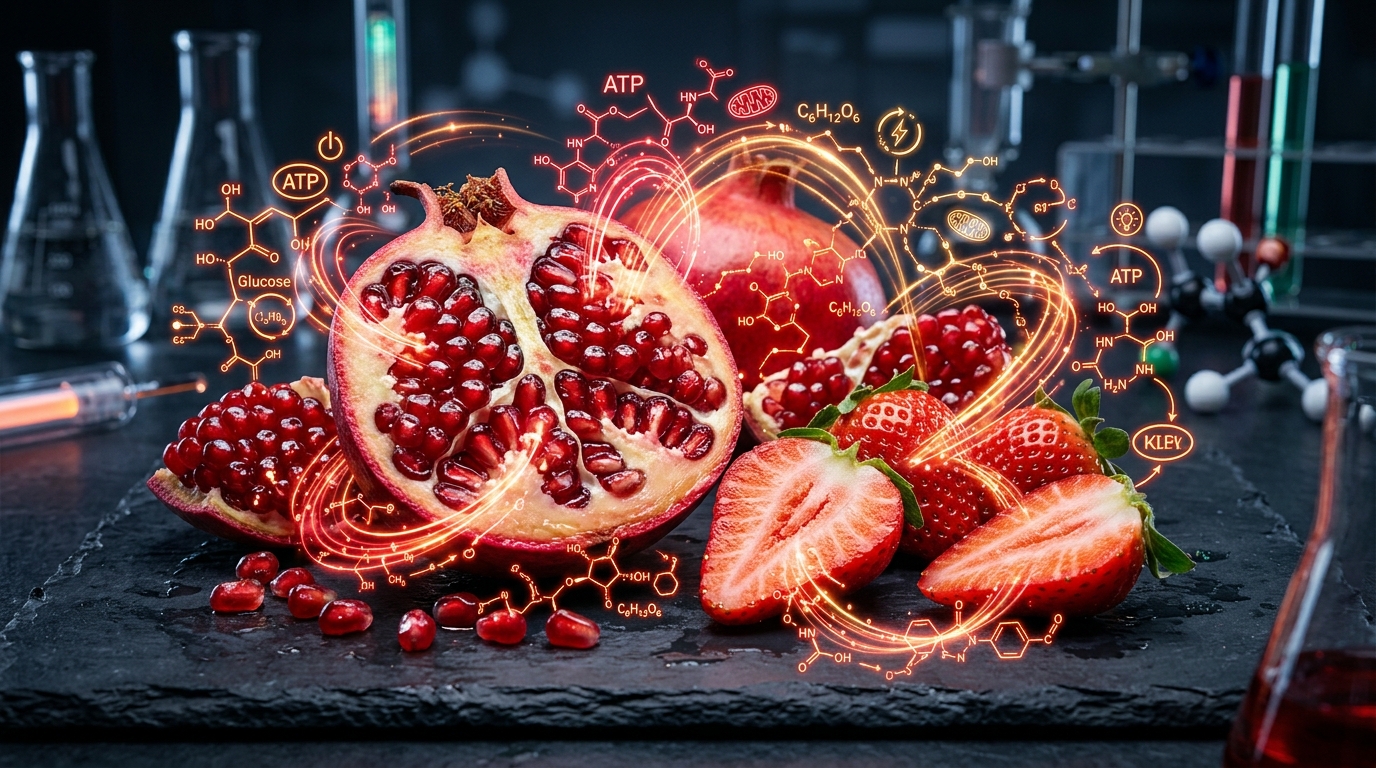
Urolithin A is a postbiotic — a beneficial compound produced by your gut bacteria when they metabolize ellagitannins, polyphenols found naturally in:
- Pomegranates
- Walnuts
- Raspberries
- Strawberries
- Blackberries
Here’s the catch: only about 30–40% of people have the right gut bacteria to efficiently convert ellagitannins into Urolithin A. Your microbiome composition, diet, and age all affect production. This is why direct supplementation has become popular — it delivers a consistent, clinically effective dose regardless of your gut bacteria.
How Urolithin A Works: The Mitophagy Mechanism
Urolithin A works by activating the PINK1/Parkin pathway, which is your cell’s built-in quality control system for mitochondria:
- Detection — PINK1 protein accumulates on the surface of damaged mitochondria
- Tagging — Parkin protein tags these damaged mitochondria for removal
- Removal — The tagged mitochondria are engulfed by autophagosomes and broken down
- Renewal — With damaged mitochondria cleared, cells can produce new, efficient ones
Think of it as a quality control inspector removing defective products from the factory floor so only the best ones remain in operation.
Clinically Demonstrated Benefits
1. Improved Muscle Health and Endurance
The most robust clinical data for Urolithin A comes from muscle health studies:
- A study published in JAMA Network Open found that Urolithin A supplementation improved muscle endurance in adults over 65 — even without exercise
- Participants showed improved fatigue resistance after four months of supplementation
- These results are particularly meaningful because age-related muscle decline (sarcopenia) is one of the leading causes of disability in older adults
2. Enhanced Mitochondrial Function
Clinical trials published in Nature Metabolism demonstrated that Urolithin A:
- Improved mitochondrial biomarkers in elderly adults
- Increased mitochondrial gene expression
- Showed a molecular signature consistent with improved cellular health
3. Reduced Inflammation
Chronic, low-grade inflammation (“inflammaging”) is a hallmark of aging. Urolithin A has been shown to reduce inflammatory markers, likely by clearing damaged mitochondria that leak pro-inflammatory signals.
4. Potential Immune Support
Emerging research suggests Urolithin A may support immune function by improving the mitochondrial health of immune cells, which are highly dependent on efficient energy production.
Urolithin A Dosage Guide
| Population | Recommended Dose | Notes |
|---|---|---|
| General adults | 500mg/day | Effective dose used in clinical trials |
| Older adults (65+) | 1,000mg/day | Higher dose studied in muscle health trials |
| Active individuals | 500–1,000mg/day | Dose may vary based on recovery goals |
Timing
Urolithin A can be taken at any time of day. Some people prefer taking it with a meal for better absorption, though it works well regardless of food intake.
How Long Until Results?
- 4 weeks: Measurable changes in mitochondrial biomarkers
- 8–16 weeks: Noticeable improvements in energy and muscle endurance
- Ongoing: Continued mitophagy support requires consistent supplementation
Urolithin A vs Other Longevity Supplements
Urolithin A vs NMN
This is one of the most common comparisons in the longevity space:
- Urolithin A focuses on mitochondrial quality (removing bad mitochondria)
- NMN focuses on mitochondrial fuel (boosting NAD+ for energy production)
They work through completely different mechanisms, which is why many researchers recommend combining them. Read our full Urolithin A vs NMN comparison for a detailed breakdown.
Urolithin A vs CoQ10
- Urolithin A recycles damaged mitochondria
- CoQ10 supports the electron transport chain in existing mitochondria
Again, complementary rather than competing. Both are included in our recommended mitochondrial supplement stack.
Safety Profile
Urolithin A has an excellent safety profile:
- GRAS status — Granted Generally Recognized As Safe by the FDA
- Clinical trial safety — No serious adverse events reported at doses up to 1,000mg/day
- Common side effects — Rare; occasional mild digestive discomfort in some individuals
- Drug interactions — No significant interactions identified, but consult your doctor if taking medications
Who Should Consider Urolithin A?
Best candidates:
- Adults over 40 experiencing declining energy or exercise recovery
- Older adults concerned about muscle health and sarcopenia
- Anyone who doesn’t regularly eat pomegranates, walnuts, or berries
- People interested in a comprehensive mitochondrial health approach
Less urgent for:
- Younger adults with high ellagitannin intake from diet
- Those already producing Urolithin A naturally (testable via some gut microbiome kits)
Frequently Asked Questions
Can I get enough Urolithin A from food?
For most people, no. You would need to eat large quantities of pomegranates daily, AND have the right gut bacteria to convert ellagitannins efficiently. Supplementation provides a reliable, consistent dose.
Is Urolithin A the same as pomegranate extract?
No. Pomegranate extract contains ellagitannins, which must be converted by gut bacteria into Urolithin A. The conversion rate varies dramatically between individuals. Supplemental Urolithin A is the end product, bypassing the need for bacterial conversion.
Can I take Urolithin A with NMN?
Yes. This is one of the most recommended combinations in longevity supplementation. NMN fuels healthy mitochondria with NAD+, while Urolithin A clears out damaged ones. They target different aspects of mitochondrial health and complement each other well.
How do I know if I’m producing Urolithin A naturally?
Some direct-to-consumer gut microbiome tests can indicate whether your gut flora includes the bacteria (like Gordonibacter urolithinfaciens) that produce Urolithin A. However, the most practical approach for most people is direct supplementation.
Is Urolithin A safe for long-term use?
Based on current evidence, yes. It has GRAS status and clinical trials have not identified any safety concerns with long-term supplementation. As with any supplement, periodic check-ins with your healthcare provider are recommended.
The Bottom Line
Urolithin A represents a genuine advance in longevity supplementation because it targets a process — mitophagy — that most other supplements don’t touch. Rather than just fueling mitochondria or protecting them from damage, it activates the cellular machinery that removes defective mitochondria entirely.
For anyone over 40, or anyone building a comprehensive mitochondrial supplement stack, Urolithin A belongs on the shortlist.
This article is for informational purposes only and does not constitute medical advice. Consult your healthcare provider before starting any supplement regimen.
Sources:
- Andreux, P.A., et al. (2019). The mitophagy activator urolithin A is safe and induces a molecular signature of improved mitochondrial and cellular health in humans. Nature Metabolism, 1(6), 595-603.
- Singh, A., et al. (2022). Urolithin A improves muscle strength and exercise performance in aging adults. JAMA Network Open, 5(1).
- D’Amico, D., et al. (2021). Impact of the natural compound urolithin A on health, disease, and aging. Trends in Molecular Medicine, 27(7), 687-699.
- Ryu, D., et al. (2016). Urolithin A induces mitophagy and prolongs lifespan in C. elegans and increases muscle function in rodents. Nature Medicine, 22(8), 879-888.