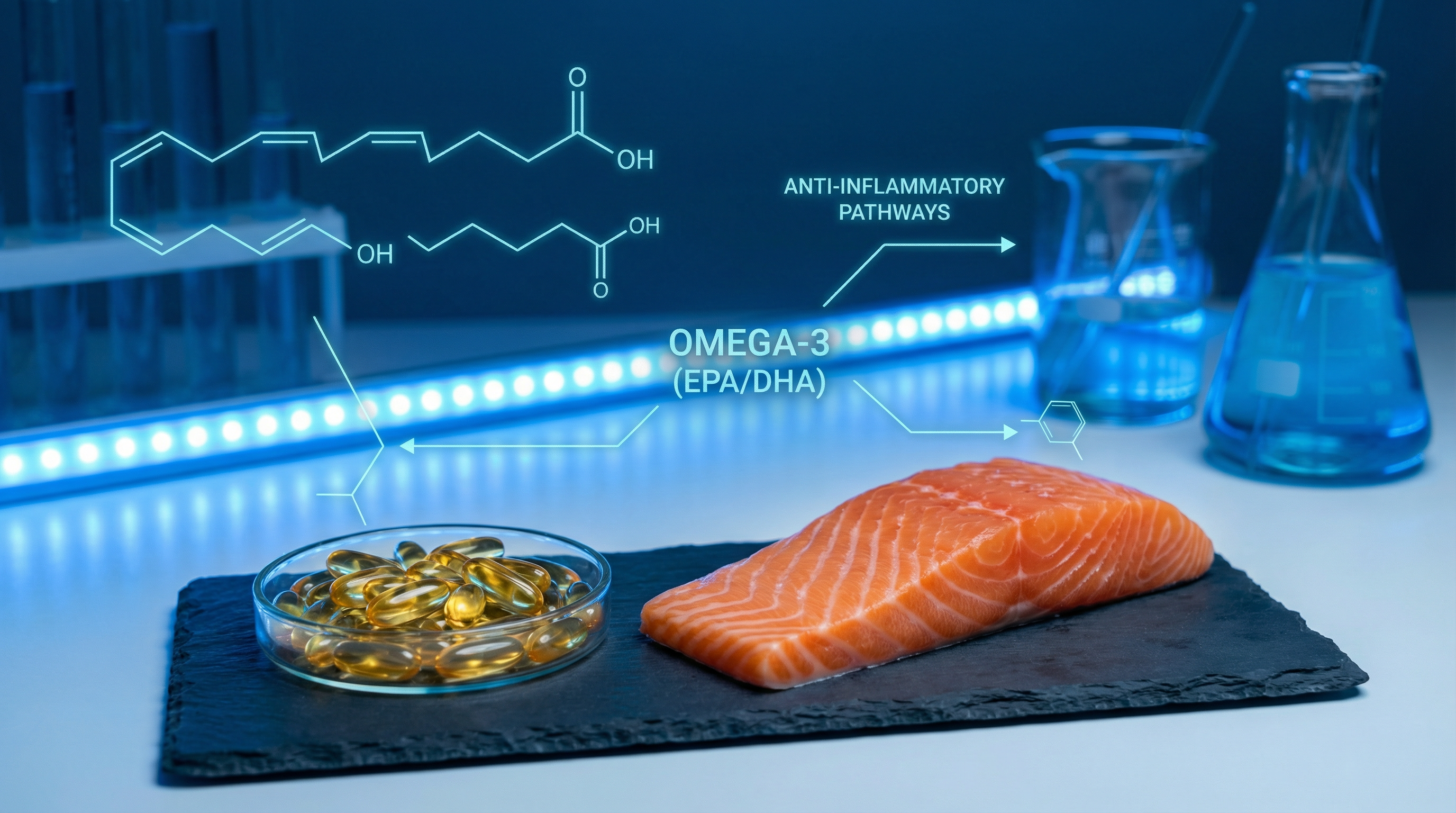
Among the most studied nutrients in the history of medicine, omega-3 fatty acids stand out not for novelty, but for depth. Decades of research spanning millions of participants across hundreds of trials have built a case that few supplements can match: omega-3s — specifically EPA (eicosapentaenoic acid) and DHA (docosahexaenoic acid) — are fundamental to cardiovascular health, brain function, inflammation regulation, and cellular aging. In a world of supplement trends that come and go, omega-3s have endured scrutiny and emerged stronger, with evidence that makes them a cornerstone of any evidence-based longevity protocol.
What Are Omega-3 Fatty Acids?
Omega-3s are polyunsaturated fatty acids characterized by a double bond at the third carbon from the omega end of the molecule. The three biologically relevant forms are:
- ALA (alpha-linolenic acid) — found in flaxseed, chia, walnuts; an essential fatty acid humans cannot synthesize, but conversion to EPA/DHA is inefficient (less than 5–10%)
- EPA (eicosapentaenoic acid) — primarily from marine sources; key anti-inflammatory mediator
- DHA (docosahexaenoic acid) — primarily from marine sources; structural component of brain and retina
Because the human body cannot synthesize EPA or DHA efficiently from plant-based ALA, dietary intake from fatty fish or supplementation is essential — especially as we age, since conversion efficiency decreases further.
Sources of EPA and DHA
| Source | EPA+DHA Content |
|---|---|
| Wild-caught salmon (100g) | ~1,500–2,000 mg |
| Mackerel (100g) | ~2,500 mg |
| Sardines (100g) | ~1,400 mg |
| Fish oil capsule (standard) | ~300–500 mg per capsule |
| High-concentration fish oil (1g) | ~700–900 mg |
| Algal oil (vegan, 1g) | ~400–500 mg DHA |
Most adults consuming a Western diet are significantly deficient in omega-3s relative to omega-6s. The optimal omega-6 to omega-3 ratio is approximately 4:1; most Western diets run 15:1 to 20:1 — a ratio associated with chronic inflammation.
How Omega-3s Work
EPA and DHA exert their effects through multiple mechanisms:
1. Eicosanoid modulation: EPA competes with arachidonic acid (an omega-6) for the same enzymes (COX and LOX), reducing production of pro-inflammatory eicosanoids (prostaglandins, thromboxanes, leukotrienes) and increasing anti-inflammatory resolvins and protectins.
2. Membrane incorporation: DHA integrates into cell membranes — particularly neuronal membranes — altering fluidity, receptor function, and signaling efficiency. Neuronal DHA content directly affects cognitive performance.
3. Gene expression: Omega-3s activate PPAR-alpha and PPAR-gamma nuclear receptors, regulating hundreds of genes involved in lipid metabolism, inflammation, and insulin sensitivity.
4. Telomere protection: Higher omega-3 index (the percentage of EPA+DHA in red blood cell membranes) is associated with slower telomere shortening — a direct cellular aging marker.
Key Health Benefits
1. Cardiovascular Protection
The cardiovascular evidence for omega-3s spans decades and multiple large trials:
Triglyceride reduction: EPA and DHA reduce serum triglycerides dose-dependently by 20–50% at therapeutic doses (3–4 g/day). This is significant because elevated triglycerides are an independent cardiovascular risk factor.
REDUCE-IT trial (2018): This landmark trial of 8,179 high-risk patients found that 4g/day of pure EPA (icosapentaenoic acid, pharmaceutical grade) reduced major cardiovascular events — heart attack, stroke, cardiovascular death — by 25% compared to placebo. This was one of the most significant cardiovascular outcomes trials in recent decades.
Anti-arrhythmic effects: DHA stabilizes cardiac membrane electrical properties, reducing risk of ventricular arrhythmias. Omega-3 supplementation reduces sudden cardiac death risk in post-MI patients.
Blood pressure: Meta-analyses show modest but consistent reductions in systolic BP (~2–3 mmHg) with regular omega-3 supplementation — clinically relevant at population scale.
Platelet aggregation: EPA reduces platelet stickiness, decreasing clotting tendency and arterial thrombosis risk.
2. Brain Health and Cognitive Function
The brain is approximately 60% fat by dry weight, and DHA constitutes about 30% of total brain fatty acids — concentrated particularly in synaptic membranes and myelin. This structural role makes DHA uniquely important for cognitive function across the lifespan.
Depression: Meta-analyses consistently show that EPA-predominant omega-3 formulas (EPA:DHA ratio > 2:1) reduce depressive symptoms comparably to antidepressants in mild-to-moderate depression. The OMEGA-3D trial found significant reduction in depressive symptoms with 1–2 g/day EPA.
Cognitive decline: Higher omega-3 index in midlife is associated with larger brain volume, better cognitive test scores, and reduced risk of dementia in longitudinal studies. The Framingham Heart Study found that individuals in the highest quartile of DHA had approximately 47% lower risk of developing all-cause dementia.
Alzheimer’s prevention: While omega-3 supplementation has shown limited benefit in established Alzheimer’s, DHA supplementation in early MCI (mild cognitive impairment) showed meaningful slowing of cognitive decline in a subset of patients.
Infant brain development: DHA is essential for fetal brain and retinal development — the basis for omega-3 recommendations during pregnancy.
3. Inflammation and Immune Modulation
Omega-3s are among the most studied anti-inflammatory agents in nutrition science:
Rheumatoid arthritis: Multiple meta-analyses demonstrate significant reductions in joint pain, morning stiffness, and NSAID requirements with 2–4 g/day omega-3 supplementation — with effects comparable to some medications.
Inflammatory biomarkers: Regular supplementation reduces circulating CRP, IL-6, TNF-alpha, and other pro-inflammatory markers — directly addressing inflammaging, the chronic low-grade inflammation that accelerates biological aging.
Gut inflammation: Omega-3s support gut barrier integrity and modulate gut microbiome composition, reducing intestinal permeability associated with systemic inflammation.
4. Muscle Preservation and Exercise Recovery
As we age, maintaining muscle mass (preventing sarcopenia) becomes critical for longevity and quality of life. Omega-3s support this through:
- Enhanced mTOR signaling: EPA and DHA amplify muscle protein synthesis in response to amino acids and insulin — essentially making protein intake more effective
- Anti-catabolic effects: Reduce inflammatory-driven muscle protein breakdown
- Exercise recovery: Lower post-exercise IL-6 and muscle damage markers, allowing faster recovery and higher training frequency
A study of older adults found that 4 months of omega-3 supplementation significantly increased muscle protein synthesis rates, muscle volume, and functional strength compared to placebo.
5. Eye Health
DHA is the most abundant fatty acid in the retina, and its role in maintaining photoreceptor membrane function is essential for visual acuity. Higher omega-3 intake is associated with:
- Reduced risk of age-related macular degeneration (AMD) by up to 38% in high-intake cohorts
- Improved dry eye symptoms (reduced inflammation of meibomian glands)
- Protection against diabetic retinopathy progression
6. Cellular Aging and Telomere Length
A 5-year randomized trial (OmegAD study extension) found that omega-3 supplementation was associated with significantly slower telomere shortening — a direct measure of cellular aging — compared to placebo. Each 1-unit increase in omega-3 index corresponded to reduced biological aging at the cellular level.
Dosage Guide
| Goal | Daily EPA+DHA | Notes |
|---|---|---|
| General health / maintenance | 1,000–2,000 mg | 2–4 standard capsules |
| Cardiovascular protection | 2,000–4,000 mg | High-concentration preferred |
| Triglyceride reduction | 3,000–4,000 mg | Consider prescription EPA |
| Anti-inflammatory / joints | 2,000–3,000 mg | EPA-dominant formulas |
| Depression support | 1,000–2,000 mg EPA | EPA:DHA ratio > 2:1 |
| Cognitive support | 1,000–2,000 mg DHA | DHA-dominant or balanced |
Quality markers to look for:
- IFOS or similar third-party certification — ensures purity, no heavy metals
- Triglyceride form (not ethyl ester) — better bioavailability, especially with meals
- EPA+DHA content per capsule — read actual EPA+DHA, not just “fish oil” weight
- Freshness: rancid fish oil (smells strongly fishy) provides reduced benefit and potential oxidative harm
- Enteric coating for those with GI sensitivity
Stacking Omega-3 With Other Supplements
Omega-3s are foundational and stack well with virtually every longevity supplement:
- Magnesium glycinate — combined anti-inflammatory and sleep benefits, synergistic cardiovascular protection
- NMN or NR — omega-3s improve mitochondrial membrane function; NAD+ precursors enhance mitochondrial energy production
- Mitochondrial support stack — DHA is structural to mitochondrial membranes
- Taurine — both support cardiovascular function through complementary mechanisms
- Ashwagandha — omega-3s and adaptogens both modulate HPA axis stress response
Safety Profile and Precautions
Omega-3s are among the safest supplements available, with an enviable track record across decades of research.
Generally safe for:
- Doses up to 5 g/day in healthy adults (FDA GRAS status)
- Long-term use across decades
Potential considerations:
- Blood thinning: High doses (>3 g/day) have mild antiplatelet effects; inform your surgeon before procedures. Combined with anticoagulants (warfarin, aspirin), monitor for increased bleeding tendency
- GI side effects: Fish burps and loose stools at high doses — use enteric-coated capsules, refrigerate, or take with meals
- Blood glucose: Very high doses may slightly raise fasting glucose in some diabetics — monitor if relevant
- Fish/shellfish allergies: Algal oil (vegan DHA) is an alternative free of fish allergens
- Oxidized oil: Rancid omega-3s may cause net harm — store properly and check freshness
FAQ
Q: Should I take EPA or DHA — or both? A: Both, ideally. EPA is the primary anti-inflammatory mediator; DHA is the structural brain fat. Most longevity benefits come from balanced EPA+DHA. Exception: for depression, EPA-dominant formulas (EPA:DHA > 2:1) show stronger evidence. For brain/cognitive focus, DHA-dominant formulas or algal DHA are preferred.
Q: Is fish oil better than plant-based omega-3 (flaxseed, chia)? A: For EPA and DHA, yes. Plant sources provide ALA, which converts to EPA/DHA at only 5–10% efficiency. If you eat no fish and prefer plant-based options, algal oil is the best alternative — it provides direct DHA (and some EPA) without the conversion bottleneck, and is actually where fish get their omega-3s.
Q: When is the best time to take fish oil? A: With your largest meal of the day, ideally one containing dietary fat. This maximizes absorption (increases bioavailability up to 30–50% compared to fasted state) and minimizes GI side effects.
Q: How long until I notice benefits from omega-3 supplementation? A: Red blood cell omega-3 index takes approximately 3–4 months of consistent supplementation to stabilize. Anti-inflammatory effects on joint pain or mood may be noticeable within 6–8 weeks. Cardiovascular and cognitive benefits occur over months to years — this is a long-term investment.
Q: Does cooking fish destroy omega-3s? A: Partially. Baking and steaming preserve most omega-3 content; grilling causes moderate losses; deep frying causes substantial losses (up to 70–85%). Canned fish (sardines, salmon, mackerel) retains omega-3s well and represents excellent value.
Omega-3 fatty acids represent one of the few supplements where the evidence is broad enough, deep enough, and replicated enough to confidently call them foundational. Whether your primary concern is cardiovascular protection, cognitive preservation, inflammation control, or cellular aging, EPA and DHA address multiple mechanisms simultaneously.
For a complete longevity protocol, explore our beginner’s supplement stack guide and discover how mitochondrial health connects to nearly every aspect of aging at best mitochondrial supplement stack.