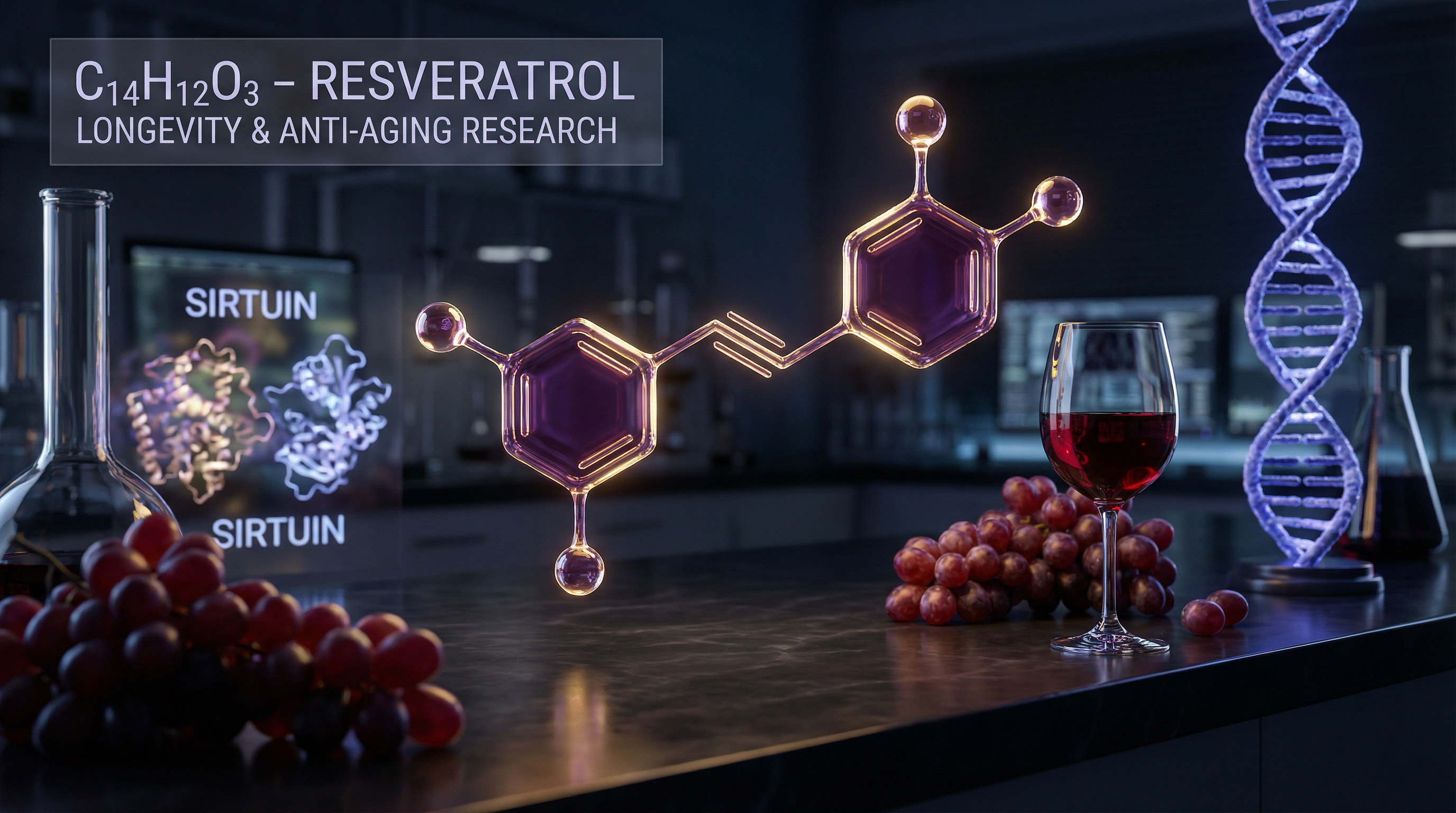
Resveratrol has become one of the most talked-about longevity compounds in the world — and for good reason. Found naturally in red wine, grapes, and Japanese knotweed, this polyphenol activates the same cellular pathways triggered by caloric restriction, one of the most reliable ways to extend lifespan in animal studies.
But does resveratrol live up to the hype? Here’s what the science actually shows.
What Is Resveratrol?
Resveratrol (3,5,4′-trihydroxystilbene) is a stilbenoid polyphenol produced by plants as a defense mechanism against stressors like UV radiation, fungal infections, and physical injury. It belongs to the same broader family as flavonoids and is classified as a phytoalexin — meaning it’s synthesized in response to threats.
The compound exists in two isomeric forms:
- Trans-resveratrol — the biologically active and more stable form
- Cis-resveratrol — less active, converted to trans by light exposure
Most resveratrol supplements contain trans-resveratrol derived from Polygonum cuspidatum (Japanese knotweed), which provides a much higher concentration than red wine.
How Resveratrol Works at the Cellular Level
Sirtuin Activation
Resveratrol’s most well-documented mechanism is activating sirtuins — a family of NAD+-dependent enzymes (SIRT1–SIRT7) that regulate cellular stress responses, DNA repair, and metabolic homeostasis.
SIRT1, in particular, controls:
- Mitochondrial biogenesis via PGC-1α activation
- Inflammatory pathways by deacetylating NF-κB
- Insulin sensitivity through GLUT4 regulation
- Autophagy induction for cellular cleanup
This is the same pathway activated by fasting and caloric restriction, which is why resveratrol is sometimes called a “caloric restriction mimetic.”
AMPK Pathway
Resveratrol also activates AMP-activated protein kinase (AMPK), a master metabolic sensor that:
- Increases glucose uptake in muscle tissue
- Promotes fat oxidation
- Inhibits mTOR, shifting cells toward repair rather than growth
- Enhances mitochondrial function and reduces oxidative stress
Antioxidant and Anti-Inflammatory Effects
Resveratrol directly scavenges free radicals and upregulates endogenous antioxidant enzymes including superoxide dismutase (SOD) and catalase. It also inhibits COX-1 and COX-2 enzymes, reducing production of pro-inflammatory prostaglandins — similar to low-dose aspirin but through a different mechanism.
Key Health Benefits
Cardiovascular Protection
The “French Paradox” — relatively low rates of heart disease in France despite a high-fat diet — helped launch resveratrol research. Red wine consumption was hypothesized as a contributing factor.
Research supports several cardioprotective effects:
- Endothelial function: Resveratrol increases nitric oxide (NO) production, promoting vasodilation and healthy blood pressure
- LDL oxidation: Prevents oxidation of LDL cholesterol, a key step in atherosclerotic plaque formation
- Platelet aggregation: Reduces excessive clotting without the bleeding risk of anticoagulants
- Cardiac hypertrophy: Animal studies show protection against pathological heart enlargement
A 2018 meta-analysis in Nutrition Research found resveratrol supplementation significantly reduced systolic blood pressure in participants with elevated cardiovascular risk.
Metabolic Health and Blood Sugar
Multiple clinical trials show resveratrol improves insulin sensitivity and glucose metabolism:
- A 2014 study in Diabetes Care found 150 mg/day resveratrol reduced fasting glucose and insulin resistance in type 2 diabetic patients
- Resveratrol activates GLUT4 transporters independently of insulin signaling
- It reduces hepatic glucose output by inhibiting gluconeogenesis enzymes
For those with metabolic syndrome or prediabetes, resveratrol may complement lifestyle interventions. It pairs well with berberine, another AMPK activator with complementary mechanisms.
Brain Health and Neuroprotection
Resveratrol crosses the blood-brain barrier and exerts neuroprotective effects through:
- BDNF upregulation: Increases brain-derived neurotrophic factor, supporting neuroplasticity
- Amyloid-beta clearance: May reduce accumulation of Alzheimer’s-associated plaques
- Cerebrovascular blood flow: Improves blood flow to the hippocampus in aging adults
- Mitochondrial protection: Reduces neuronal oxidative stress and preserves cognitive function
A 2015 clinical trial in Neurology found 1,000 mg/day resveratrol stabilized biomarkers of Alzheimer’s disease progression over 12 months.
Longevity and Lifespan Extension
Animal studies have shown impressive lifespan extension:
- Yeast, worms (C. elegans), and fruit flies all showed significant lifespan increases with resveratrol
- Mice on high-fat diets given resveratrol lived significantly longer than controls
- Effects were less dramatic in healthy, calorie-restricted mice — suggesting resveratrol may primarily offset the damage of excess calories
Human longevity data is still limited, but the mechanistic evidence for sirtuin activation and mitochondrial support is compelling.
Bioavailability: The Main Challenge
Resveratrol’s biggest limitation is poor bioavailability. Oral resveratrol is rapidly metabolized by gut bacteria and liver enzymes into sulfate and glucuronide conjugates, with free resveratrol making up only 1-2% of plasma concentrations after absorption.
Strategies to improve bioavailability:
- Micronized resveratrol: Smaller particle size increases surface area and absorption
- Liposomal formulations: Encapsulation in phospholipid vesicles protects resveratrol from metabolism
- Piperine co-administration: Black pepper extract inhibits liver enzymes that break down resveratrol (may increase levels by up to 229%)
- NMN or NAD+ co-supplementation: Replenishes NAD+ that sirtuins consume, potentially amplifying resveratrol’s effects
Dosage and Supplementation
Standard Doses in Research
| Purpose | Typical Dose | Study Duration |
|---|---|---|
| General health | 100–250 mg/day | Ongoing |
| Cardiovascular | 150–500 mg/day | 3–12 months |
| Blood sugar | 150–1,000 mg/day | 1–6 months |
| Neuroprotection | 500–1,000 mg/day | 6–12 months |
Practical Recommendations
- Start low: 100–250 mg/day with meals
- Timing: Take with a fat-containing meal to improve absorption
- Cycling: Some practitioners suggest cycling (5 days on, 2 days off) to prevent tolerance
- With NMN: Combining with 250–500 mg NMN may enhance sirtuin activation since both NAD+ substrate and sirtuin activator are present
Food Sources
Resveratrol occurs naturally in:
- Red grapes and red wine (0.2–5 mg per glass — far below therapeutic doses)
- Blueberries and cranberries
- Peanuts and peanut butter
- Dark chocolate
- Japanese knotweed (highest concentration)
Dietary sources alone are insufficient for the doses studied in clinical trials, which is why supplementation is typically required.
Safety and Side Effects
Resveratrol has a strong safety profile in clinical trials up to 1,000 mg/day. Higher doses (2,500–5,000 mg/day) have been studied without serious adverse events, though some participants reported:
- Mild gastrointestinal discomfort (nausea, diarrhea) at high doses
- Headache
- Fatigue at very high doses (above 2,500 mg/day)
Important Considerations
- Drug interactions: Resveratrol inhibits CYP3A4 and CYP2C9 liver enzymes, potentially increasing blood levels of warfarin, statins, and certain medications — consult your doctor if you take prescription drugs
- Estrogen sensitivity: Resveratrol has mild estrogenic activity; women with hormone-sensitive conditions should use caution
- Surgery: Discontinue 2 weeks before surgery due to antiplatelet effects
- Pregnancy: Insufficient safety data; avoid supplementation during pregnancy
Resveratrol vs. Pterostilbene
Pterostilbene is a close structural analog of resveratrol with two methoxy groups instead of hydroxyl groups. This modification makes it:
- More bioavailable (approximately 80% vs. 1-2% for resveratrol)
- More lipophilic (crosses membranes more easily)
- Longer half-life in circulation
Pterostilbene activates many of the same pathways as resveratrol at lower doses (10–50 mg/day). Some researchers consider it a superior supplement form, though resveratrol has a larger body of clinical research.
Who Should Consider Resveratrol?
Good candidates:
- Adults over 40 looking for general longevity support
- People with metabolic syndrome, prediabetes, or elevated cardiovascular risk
- Anyone with a family history of neurodegenerative disease
- Those supplementing with NMN or NAD+ precursors (synergistic)
Less likely to benefit:
- Young, healthy adults with excellent diet and exercise habits
- Those expecting dramatic short-term effects
Frequently Asked Questions
Q: Can I get enough resveratrol from red wine? A: No. A glass of red wine contains roughly 0.2–2 mg of resveratrol — far below the 100–1,000 mg doses used in clinical studies. Additionally, the alcohol in wine counteracts many health benefits.
Q: Does resveratrol need to be taken with NMN? A: Not required, but they’re synergistic. Resveratrol activates sirtuins, which consume NAD+. Taking NMN alongside resveratrol replenishes NAD+ levels, potentially amplifying the effect.
Q: How long does it take to feel effects from resveratrol? A: Most measurable benefits in clinical trials required 3–6 months of consistent supplementation. Don’t expect rapid changes.
Q: Is resveratrol the same as quercetin? A: No — they’re different polyphenols with overlapping but distinct mechanisms. Quercetin is primarily known as a senolytic (clears senescent cells), while resveratrol is better studied for sirtuin activation and cardiovascular effects. They can be taken together.
Q: What’s the best time of day to take resveratrol? A: With a meal containing some fat to maximize absorption. Morning or midday is generally preferred, as some users report mild sleep disruption when taking it close to bedtime.
Resveratrol remains one of the most scientifically supported longevity supplements available. While bioavailability challenges limit its potency compared to some newer compounds, the breadth of research across cardiovascular, metabolic, neurological, and cellular aging endpoints is unmatched. For a comprehensive longevity protocol, pairing resveratrol with NMN and a quality mitochondrial stack covers many of the key aging pathways simultaneously.